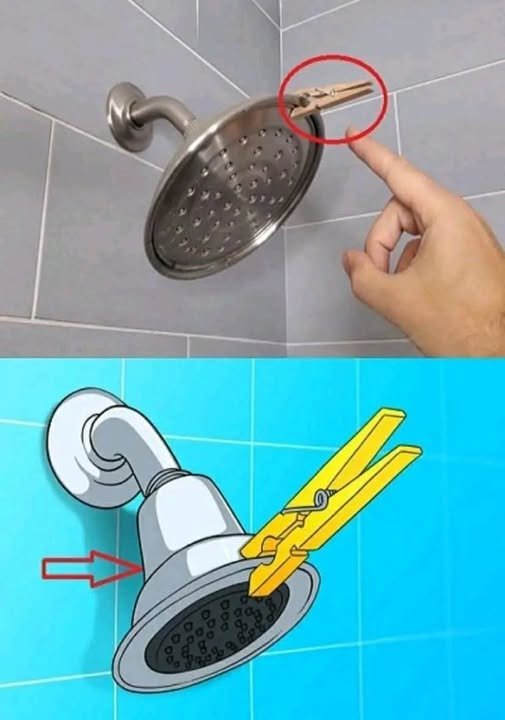
Why Hang a Clothespin Above the Shower? The Simple Trick You’ll Want to Try
🪵 How to Make a DIY Shower Scent Diffuser
Step 1: Choose a Wooden Clothespin
Use a plain wooden clothespin rather than a plastic one.
Wood is porous, so it can absorb a small amount of essential oil.
Make sure the clothespin is clean and hasn’t previously been used with cleaning products or other chemicals.
Step 2: Add the Essential Oil
Place approximately 3–5 drops of your chosen essential oil onto the wooden portion of the clothespin.
You don’t need to soak it.
A small amount is enough to create fragrance.
Step 3: Let It Absorb
Give the oil a minute or two to soak into the wood.
This also helps prevent excess oil from dripping.
Step 4: Attach It Near the Shower
Attach the clothespin somewhere outside the direct stream of water.
For example, you could attach it to a suitable shower caddy or another location where it won’t interfere with the shower controls.
The goal is to allow the warm, humid air to carry the aroma without washing the oil away immediately.
Step 5: Enjoy the Scent
As you shower, the warmth and moisture can make the fragrance more noticeable.
That’s the entire trick.
No complicated equipment required.
🍃 Why Does It Work?
Wood is naturally porous.
When you add a small amount of essential oil to the wood, some of the oil is absorbed into its surface.
As the shower environment becomes warm and humid, the fragrance can gradually become noticeable.
It’s essentially a very simple passive diffuser.
Unlike an electronic diffuser, there’s no electricity, water reservoir, or complicated setup.
🧖♀️ Make Your Shower Feel More Relaxing
One of the biggest attractions of this trick isn’t necessarily a medical benefit.
It’s the experience.
A pleasant fragrance can make a normal shower feel more spa-like.
For example, lavender is often associated with relaxing scents, while eucalyptus and peppermint have fresh, cooling aromas.
Your choice ultimately comes down to what you enjoy.
⚠️ Important Safety Tips
This is where viral DIY posts often leave out important information.
Essential oils are highly concentrated substances and shouldn’t automatically be assumed to be harmless simply because they’re “natural.”
Don’t Put Essential Oil Directly on Your Skin
Unless an essential oil is specifically formulated and appropriately diluted for topical use, avoid applying concentrated essential oil directly to your skin.
For this particular trick, the oil should remain on the wooden clothespin.
Keep It Away From Your Eyes
Don’t position the clothespin somewhere where oil or concentrated fragrance could come into contact with your eyes.
If irritation occurs, stop using it.
Don’t Use Too Much Oil
More isn’t necessarily better.
A few drops are enough for a small shower area.
Using a large quantity can create an overpowering smell and may irritate sensitive people.
Be Careful Around Children and Pets
Some essential oils can be inappropriate for young children or certain pets.
If children or animals share your home, choose products carefully and keep essential oils securely stored.
Watch for Slippery Surfaces
Don’t allow essential oil to drip onto the shower floor.
Oil can make surfaces slippery.
This is especially important in a bathroom, where falls are already a concern.
🚫 Don’t Attach It Somewhere Unsafe
The clothespin shouldn’t block:
The shower controls
Drainage
Your movement
The showerhead
Any electrical equipment
And don’t attach it to a place where it could fall into the shower and become a slipping hazard.
A secure, dry location outside the direct water stream is best.
🌿 Which Essential Oil Should You Choose?
There’s no single “correct” oil.
Eucalyptus
A fresh, herbal aroma that’s popular in shower products.
Lavender
A softer floral scent that many people associate with relaxation.
Peppermint
A strong, minty fragrance that can make the shower feel particularly refreshing.
Lemon
Bright and citrusy, especially appealing if you prefer fresh scents.
Rosemary
Herbal and distinctive, with a fragrance that’s popular in personal-care products.
Important: These scents can make your shower smell pleasant, but they shouldn’t be presented as cures for congestion, headaches, anxiety, or other medical conditions.
🧼 How Often Should You Replace the Clothespin?
There’s no need to keep using the same clothespin indefinitely.
Because it’s exposed to moisture, allow it to dry between uses.
If it develops:
Mold
A musty smell
Discoloration
Damage
Excessive moisture
replace it.
You can also use a fresh clothespin whenever you want to change fragrances.
💡 An Even Simpler Version
If you don’t have essential oil, you don’t necessarily need to make a complicated mixture.
The main idea is simply to create a pleasant aroma in the shower.
You could also use commercially prepared shower aromatherapy products if you’d rather have a product specifically designed for bathroom use.
The advantage of those products is that they’re formulated for their intended purpose rather than relying on a homemade setup.
🤔 Why Is This Trick Suddenly So Popular?
People love household tricks that are:
Cheap
Simple
Easy to try
Made with items they already have
A wooden clothespin costs very little, takes up almost no space, and can be reused.
That’s probably why the idea has become popular on social media.
It’s less about a miraculous transformation and more about finding a clever use for an everyday object.
🏡 A Tiny DIY Spa at Home
You don’t need an expensive bathroom makeover to make your shower feel different.
A clean wooden clothespin, a few drops of a fragrance you enjoy, and a safe place to hang it can create a simple aromatherapy-inspired experience.
The important thing is to keep expectations realistic.
It can make your shower smell wonderful—but it’s not a medical treatment.
Final Thoughts
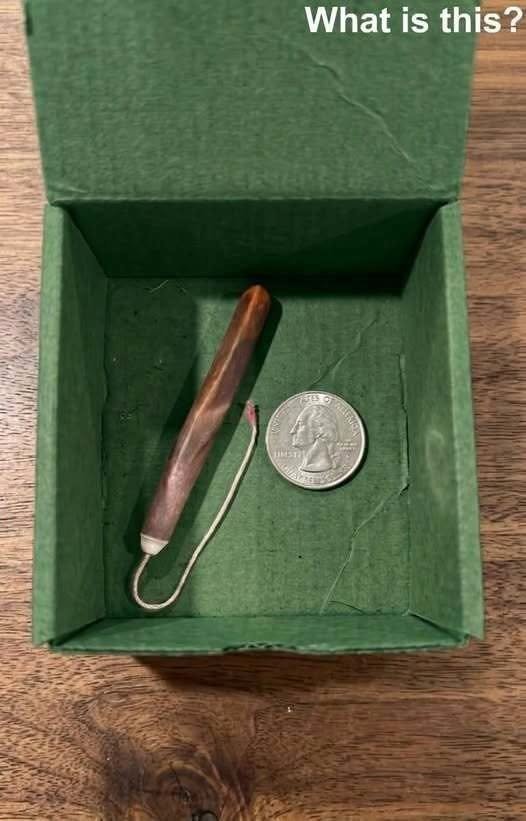
The mysterious clothespin above the shower isn’t there for decoration.
It’s a simple DIY shower scent diffuser.
A wooden clothespin can absorb a few drops of essential oil and release the fragrance gradually as you shower.
If you try the trick, remember to:
✔️ Use a clean wooden clothespin
✔️ Use only a few drops of essential oil
✔️ Keep it out of the direct water stream
✔️ Prevent oil from getting onto the shower floor
✔️ Keep essential oils away from children and pets
✔️ Stop if the fragrance causes irritation or discomfort
Sometimes the simplest household ideas are the most interesting ones.
🚿 Would You Try This?
Have you ever used a wooden clothespin as a shower diffuser?
Which scent would you choose—eucalyptus, lavender, peppermint, lemon, or something else?
To provide the best experiences, we use technologies like cookies to store and/or access device information. Consenting to these technologies will allow us to process data such as browsing behavior or unique IDs on this site. Not consenting or withdrawing consent, may adversely affect certain features and functions.
Functional
Always active
The technical storage or access is strictly necessary for the legitimate purpose of enabling the use of a specific service explicitly requested by the subscriber or user, or for the sole purpose of carrying out the transmission of a communication over an electronic communications network.
Preferences
The technical storage or access is necessary for the legitimate purpose of storing preferences that are not requested by the subscriber or user.
Statistics
The technical storage or access that is used exclusively for statistical purposes.The technical storage or access that is used exclusively for anonymous statistical purposes. Without a subpoena, voluntary compliance on the part of your Internet Service Provider, or additional records from a third party, information stored or retrieved for this purpose alone cannot usually be used to identify you.
Marketing
The technical storage or access is required to create user profiles to send advertising, or to track the user on a website or across several websites for similar marketing purposes.