What Are Eye Floaters? Here’s What to Do If You Start Seeing Them
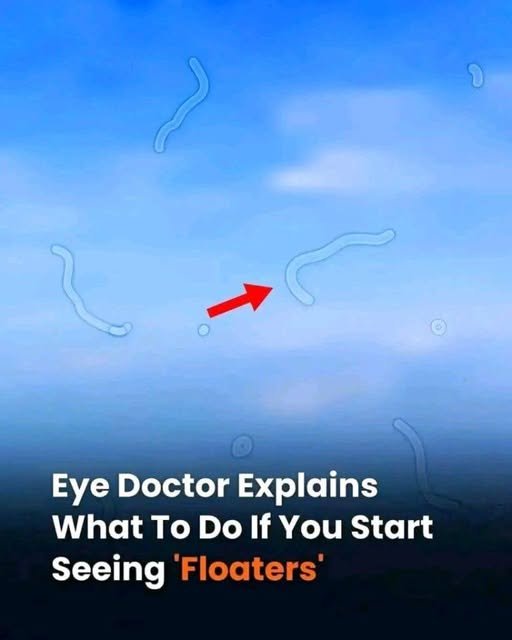
Have you ever noticed tiny dots, spots, lines, cobwebs, or squiggly shapes moving across your vision?
These are commonly called eye floaters. They can be annoying or distracting, especially when looking at a bright wall, the sky, or a computer screen.
In many cases, floaters are harmless. But if they appear suddenly, especially together with flashes of light, they can sometimes signal a problem that needs urgent attention. (nhs.uk)
👁️ What Exactly Are Eye Floaters?
Floaters are shadows cast onto the retina by tiny structures or clumps within the vitreous, the clear, jelly-like substance that fills much of the inside of the eye.
They can appear as:
Small dark dots
Thin lines
Rings
Cobweb-like shapes
Curved or squiggly strands
Small clouds or spots
They often seem to move when you move your eyes and then slowly drift when your eyes stop moving. (Moorfields Eye Hospital)
🧓 Why Do Floaters Happen?
One common cause is the natural aging process.
As we get older, the vitreous gel can gradually become more liquid and change structure. Small collagen fibers can become more noticeable and cast shadows on the retina.
This process is often associated with posterior vitreous detachment (PVD). PVD is common with aging and is frequently harmless, although it can occasionally cause a retinal tear. (Moorfields Eye Hospital)
Floaters can also occur after eye surgery or injury and with certain eye conditions. (Moorfields Eye Hospital)
🟢 When Are Floaters Usually Harmless?
If you’ve had a few floaters for a long time, they haven’t changed, and your vision is otherwise normal, they are often not serious.
Many people eventually notice them less because the brain becomes accustomed to them. (nhs.uk)
You don’t necessarily need treatment for ordinary floaters.
🚨 When Should You Be Concerned?
This is the most important part.
New or sudden floaters should not simply be ignored.
Seek an urgent eye examination if you suddenly notice:
A large number of new floaters
A sudden “shower” of floaters
Flashes of light
A dark curtain or shadow across part of your vision
Sudden blurred or reduced vision
Loss of part of your visual field
These symptoms can occur with a retinal tear or retinal detachment, which can permanently affect vision if not treated promptly. (nhs.uk)
⚡ What Are Those Flashes of Light?
Some people with changes in the vitreous notice brief flashes that can look like:
Lightning streaks
Sparks
Camera flashes
Bright flickers at the edge of vision
Flashes can happen when the changing vitreous pulls on or stimulates the retina. While this can occur with a harmless PVD, it can also accompany a retinal tear, so new flashes should be assessed promptly. (Moorfields Eye Hospital)
🩺 What Should You Do If You Suddenly See Floaters?
Don’t try to diagnose the cause yourself.
Arrange an urgent eye examination, particularly if the floaters are new or accompanied by flashes.
An eye-care professional can examine the retina and determine whether there is a tear, retinal detachment, or another cause.
🕶️ Can Eye Floaters Be Treated?
Most ordinary floaters don’t require treatment.
Over time, they may become less noticeable.
If floaters are persistent and significantly interfere with vision, an ophthalmologist can discuss whether treatment is appropriate. Treatment isn’t necessary for most people, and procedures have their own risks. (Moorfields Eye Hospital)
👀 Who May Have a Higher Risk?
Certain factors can increase the risk of retinal problems, including:
Increasing age
Significant nearsightedness
Previous cataract or other eye surgery
Previous eye injury
A family history of retinal detachment
This doesn’t mean someone with these factors will develop a retinal problem—it simply means new symptoms deserve particular attention. (nhs.uk)
Final Thoughts
Eye floaters are very common, and many are harmless. They often become less noticeable with time.
But there is one rule worth remembering:
A sudden change in floaters = get your eyes checked urgently.
Especially if you also experience flashes, blurred vision, or a dark curtain/shadow, don’t wait to see if it goes away. These can be warning signs of a retinal tear or detachment. (nhs.uk)
Have you ever noticed little dots or cobweb-like shapes moving across your vision? 👁️ Tell us what they look like in the comments.
To provide the best experiences, we use technologies like cookies to store and/or access device information. Consenting to these technologies will allow us to process data such as browsing behavior or unique IDs on this site. Not consenting or withdrawing consent, may adversely affect certain features and functions.
Functional
Always active
The technical storage or access is strictly necessary for the legitimate purpose of enabling the use of a specific service explicitly requested by the subscriber or user, or for the sole purpose of carrying out the transmission of a communication over an electronic communications network.
Preferences
The technical storage or access is necessary for the legitimate purpose of storing preferences that are not requested by the subscriber or user.
Statistics
The technical storage or access that is used exclusively for statistical purposes.The technical storage or access that is used exclusively for anonymous statistical purposes. Without a subpoena, voluntary compliance on the part of your Internet Service Provider, or additional records from a third party, information stored or retrieved for this purpose alone cannot usually be used to identify you.
Marketing
The technical storage or access is required to create user profiles to send advertising, or to track the user on a website or across several websites for similar marketing purposes.