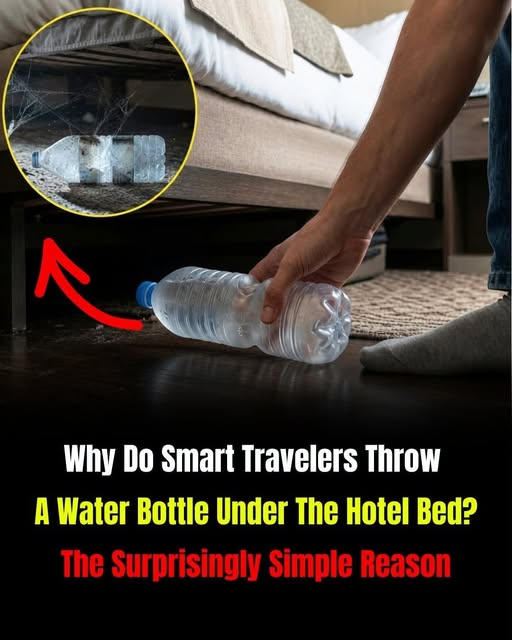
When you check into a hotel, you probably inspect the bathroom, put your luggage down, and check whether the bed looks comfortable. But some travelers have another unusual habit: they roll a plastic water bottle underneath the bed before settling in.
It may look strange, but the idea is simple. The bottle can help you check whether the space beneath the bed is obstructed without immediately bending down or crawling onto the floor.
This travel tip has attracted attention online, particularly among people traveling alone. However, it is important to understand what the trick can actually reveal—and why it should never be treated as a guarantee of safety.
What Is the Water Bottle Hotel Trick?
The method involves taking a lightweight plastic water bottle and gently rolling it underneath the hotel bed.
If the bottle rolls through the space and emerges on the other side, it suggests that the path is relatively clear. If it stops or becomes trapped, something may be blocking its way.
That obstruction could be a bed support, a piece of luggage, a forgotten item, or another ordinary object. The bottle cannot tell you what is underneath the bed, and a stopped bottle does not automatically mean that something dangerous is present.
The purpose is simply to encourage travelers to check a space that can be difficult to see, especially when the bed frame is low or the room is poorly lit.
Why Would Travelers Check Under a Hotel Bed?
1. To Inspect a Hard-to-See Area
Hotel beds can have large frames, deep bases, or long bed skirts that make it difficult to see underneath them from a standing position.
Rolling a bottle under the bed may help reveal whether the space is open or obstructed. You can then use a flashlight to inspect the area more carefully if needed.
2. To Avoid Immediately Crawling on the Floor
Getting down on your hands and knees to inspect beneath a bed may be uncomfortable, particularly for older travelers or people with limited mobility.
A bottle offers a simple alternative for an initial check. However, it does not replace looking at the area directly when you have a genuine concern.
3. To Notice Forgotten Items or Cleaning Issues
Objects can occasionally be left underneath hotel furniture. These might include clothing, rubbish, luggage, or belongings from a previous guest.
A quick inspection can help you notice an item that needs to be removed or alert hotel staff to a cleaning issue.
4. To Feel More Prepared When Traveling Alone
Some travelers prefer to follow a simple room-check routine before unpacking or going to sleep.
Checking the space beneath the bed can be one small part of that routine. The aim should be to become familiar with the room, not to assume that every unfamiliar space presents a danger.
What If the Bottle Does Not Come Out?
First, do not panic.
A bottle can stop moving for many ordinary reasons, including:
- A central support beam beneath the bed.
- A bed frame or storage compartment.
- Thick carpet or an uneven floor.
- A wall or furniture positioned close to the bed.
- Luggage or another object left underneath it.
If you are comfortable doing so, turn on the lights and inspect the area from a safe position. A flashlight can help you see into dark corners.
If you notice something genuinely suspicious or believe another person may be inside your room, leave the room if you can do so safely and contact hotel security or local emergency services. Do not approach or confront anyone yourself.
Does the Water Bottle Trick Guarantee Hotel Room Safety?
No. This is the most important limitation to understand.
A bottle that rolls freely underneath a bed cannot prove that the entire room is safe. It does not inspect closets, bathrooms, adjoining rooms, windows, or other areas.
Likewise, a bottle that becomes stuck is not evidence that someone is hiding underneath the bed.
The technique is an informal travel tip, not an established security test. The more reliable approach is to follow basic hotel safety practices and contact staff if something seems wrong.
What Should You Check When You First Enter a Hotel Room?
The U.S. Department of State recommends that travelers inspect their accommodation after checking in, including looking under the bed and behind curtains. It also advises checking locks and identifying emergency exits.
Here are some practical steps you can follow.
Check the Door and Locks
Make sure the room door closes properly and that the deadbolt or security latch works. If the lock is damaged or the door does not secure properly, contact reception and request assistance or another room.
Look at the Windows and Balcony Doors
Check that windows and balcony doors close and lock securely, where applicable. Do not attempt to repair a faulty lock yourself.
Locate the Emergency Exits
Take a moment to identify the nearest emergency exit and review the evacuation information provided by the hotel.
Knowing your route before an emergency occurs can make it easier to respond calmly.
Check Behind Curtains and Around Furniture
Take a quick look around the room, including behind curtains and in accessible areas beneath furniture. You do not need to become suspicious of every object; the goal is simply to notice anything unusual.
Make Sure Important Safety Equipment Is Present
Check the room information for details about fire alarms, smoke detectors, and emergency procedures. If you notice a safety concern, notify hotel staff promptly.
These measures provide a more useful foundation for room safety than relying on any single travel hack.
Is This Trick Useful for Solo Travelers?
It can be a convenient way to start checking an unfamiliar room, but solo travelers should focus on several precautions rather than just one.
Keep your room key secure, avoid sharing your room number unnecessarily, and use the door’s security features whenever appropriate. If someone arrives unexpectedly claiming to be hotel staff, verify their identity with reception before allowing access.
If you feel uncomfortable with a room or notice a security problem, contact hotel management and request assistance. You do not need to investigate a suspicious situation alone.
Other Simple Hotel Habits Worth Following
Along with checking under the bed, consider these habits:
- Keep valuables and travel documents secure.
- Avoid leaving your room door unlocked, even briefly.
- Learn how to contact reception or hotel security.
- Report broken locks, damaged windows, or unusual activity.
- Keep your phone charged and know the local emergency number.
- Review the hotel’s emergency instructions when you arrive.
These steps are practical precautions that can help you feel more prepared without creating unnecessary anxiety.
Frequently Asked Questions
Why do people throw a water bottle under a hotel bed?
They use it as a quick way to check whether the space beneath the bed is open or obstructed, without immediately bending down to look underneath.
What does it mean if the bottle gets stuck?
It means the bottle has encountered an obstruction or lost momentum. The cause could be an ordinary bed support, carpet, luggage, or another object. It does not automatically indicate danger.
Can someone hide under a hotel bed?
The physical space beneath some beds may be large enough for a person, while other bed designs leave little or no room. If you genuinely suspect someone is in your room, leave safely and contact hotel security rather than investigating or confronting them.
Is this an official hotel safety recommendation?
The water bottle method is an informal travel tip, not a guarantee of security. Official travel guidance recommends checking under the bed and around the room directly, ensuring doors and windows lock, and knowing the emergency exits.
Should I use this trick every time I stay in a hotel?
That is a personal choice. You may find it useful as a quick initial check, but a normal room inspection and sensible security precautions are more important.
Final Thoughts
Rolling a water bottle underneath a hotel bed is a simple trick designed to help travelers check a space that is often difficult to see. It can reveal that something is blocking the path and remind you to inspect the area before settling in.
However, it cannot identify what is underneath the bed or guarantee that a hotel room is safe.
The best approach is to combine common sense with a few practical habits: check the locks, look around the room, locate emergency exits, and contact hotel staff if anything genuinely concerns you.
Smart travel is about being prepared, not frightened. A water bottle may help you check one small area, but awareness and sensible safety practices matter much more.