Many people have a favorite sleeping position, and for some, that means lying on their right side every night. But did you know that the side you sleep on may influence how stomach acid moves into your esophagus?
Although sleeping on your right side is not automatically harmful, research suggests that sleeping on your left side may help reduce nighttime acid reflux, especially for people who experience heartburn or gastroesophageal reflux disease (GERD).
Understanding why this happens can help you make more comfortable choices at bedtime.
How Does Your Sleeping Position Affect Digestion?
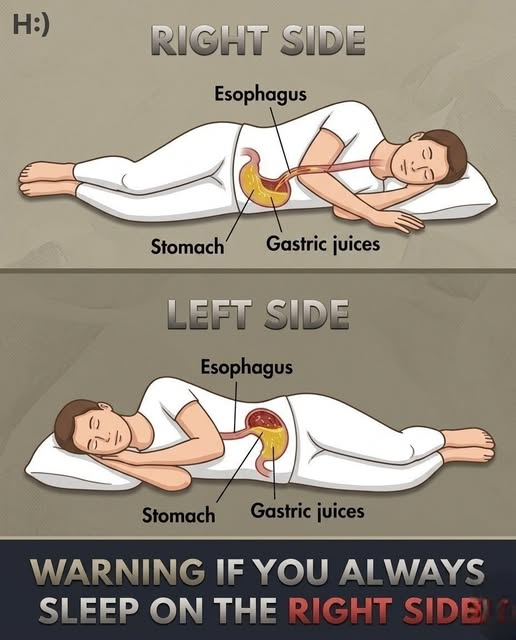
Your stomach produces gastric juices containing acid and digestive enzymes that help break down food. The esophagus, meanwhile, carries food from your mouth to your stomach.
A muscular ring called the lower esophageal sphincter helps prevent stomach contents from flowing backward into the esophagus. When this barrier does not work properly, stomach acid can move upward and cause symptoms such as heartburn, a sour taste in the mouth, or regurgitation.
Your sleeping position can influence how easily this reflux occurs.
Why Sleeping on Your Right Side May Worsen Acid Reflux
When you lie on your right side, the position of your stomach relative to the connection between the stomach and esophagus may make it easier for stomach contents to flow backward.
Research comparing sleeping positions has found that right-side sleeping can be associated with longer exposure of the esophagus to stomach acid than left-side sleeping.
This may be particularly noticeable if you:
- Experience heartburn after dinner.
- Wake up with a sour or bitter taste in your mouth.
- Frequently experience acid reflux during the night.
- Have been diagnosed with GERD.
However, not everyone who sleeps on their right side will experience these symptoms. The position itself does not mean that you have a digestive disorder.
Why Sleeping on Your Left Side May Help
Sleeping on your left side changes the relationship between the stomach and the esophagus. This position may help keep stomach contents away from the esophageal opening and allow acid that enters the esophagus to clear more quickly.
A systematic review and meta-analysis published in 2023 found evidence that left-side sleeping may reduce nighttime acid exposure and improve reflux-related symptoms compared with right-side sleeping.
For people who regularly experience nighttime heartburn, trying the left-side position may therefore be a simple lifestyle adjustment worth considering.
Is Sleeping on Your Right Side Dangerous?
No. There is no good evidence that sleeping on your right side is inherently dangerous for otherwise healthy people.
The research primarily concerns acid reflux, not a general warning that right-side sleeping damages the stomach or harms the body. If you sleep comfortably on your right side and do not experience reflux symptoms, there is usually no reason to force yourself to change positions.
Your comfort, medical history, and any advice from your healthcare professional should guide your sleeping habits.
Five Ways to Reduce Nighttime Acid Reflux
If heartburn frequently interrupts your sleep, consider these practical steps:
1. Try sleeping on your left side
Experiment with left-side sleeping to see whether it reduces your symptoms.
2. Avoid lying down immediately after eating
Try to leave about three hours between your evening meal and bedtime, particularly if you experience reflux at night.
3. Elevate your upper body
A wedge pillow or raising the head of the bed may help reduce nighttime reflux. Simply stacking several soft pillows may not provide the same support.
4. Identify foods that trigger your symptoms
Some people notice worsening symptoms after fatty meals, chocolate, coffee, spicy foods, or acidic foods. Triggers vary, so focus on the foods that affect you personally rather than eliminating everything unnecessarily.
5. Seek medical advice if symptoms persist
Frequent heartburn may require assessment and treatment. A healthcare professional can help determine whether you have GERD or another condition.
When Should You See a Doctor?
Occasional heartburn is common, but persistent or worsening symptoms deserve medical attention.
Seek prompt medical evaluation if you have difficulty swallowing, persistent vomiting, unexplained weight loss, or signs of gastrointestinal bleeding, such as black, tarry stools.
Chest pain can sometimes be caused by a heart problem rather than acid reflux. Seek emergency care for new or severe chest pain, especially when accompanied by shortness of breath, sweating, nausea, or pain spreading to the arm, back, neck, or jaw.
Frequently Asked Questions
Is it better to sleep on the left or right side for acid reflux?
For people with nighttime acid reflux, research generally favors sleeping on the left side because it may reduce esophageal acid exposure.
Can sleeping on the right side cause heartburn?
It may worsen reflux in some people, but it does not cause heartburn in everyone.
Should everyone sleep on their left side?
No. People without reflux symptoms do not necessarily need to change their preferred sleeping position.
Does sleeping on the left side cure GERD?
No. It may help manage nighttime symptoms, but it is not a cure. Some people need medication, further evaluation, or additional lifestyle changes.
Is it enough to change my sleeping position?
Not always. Meal timing, individual food triggers, body weight when relevant, and appropriate medical treatment may also affect symptoms.
Final Thoughts
Your sleeping position can influence digestion, particularly when it comes to nighttime acid reflux. Evidence suggests that sleeping on the left side may be helpful for people who experience heartburn, while sleeping on the right side may worsen symptoms in some cases.
The important point is not to panic if you prefer sleeping on your right side. Instead, pay attention to your symptoms and consider trying the left-side position if nighttime reflux is a problem.
A small change in your bedtime routine may help you sleep more comfortably.
Medical disclaimer: This article is for educational purposes only and does not replace professional medical advice, diagnosis, or treatment.