Which Kitchen Appliances Should You Unplug Before Going to Bed?
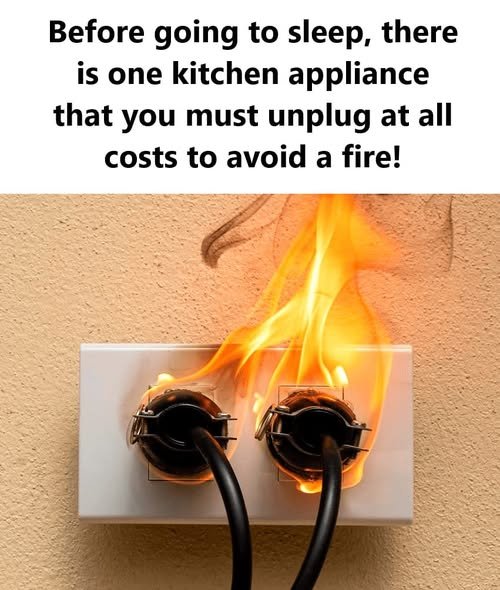
The image above shows a dramatic electrical fire, but the message behind it is worth paying attention to: some kitchen appliances are better unplugged when they are not being used, especially appliances that produce heat.
There is no single appliance that everyone must unplug “at all costs.” The safest approach is to understand which appliances present a greater risk and follow the manufacturer’s instructions.
The National Fire Protection Association (NFPA) specifically recommends disconnecting small electrical appliances such as toasters, coffee makers, televisions, and blenders when they are not in use. (NFPA)
🔥 Why Unplug Kitchen Appliances?
Electrical problems can result from damaged cords, faulty plugs, overheating, or overloaded outlets.
Heat-producing appliances deserve particular attention because they can draw significant electrical current. NFPA advises plugging only one heat-producing appliance into an outlet at a time to help prevent wiring from overheating. (NFPA Content)
⚠️ Appliances Worth Checking Before Bed
1. Toaster
A toaster is one of the appliances worth unplugging after use.
Crumbs and food particles can accumulate inside, and the appliance produces considerable heat during operation.
Use it, allow it to cool, and unplug it when finished.
2. Coffee Maker
If your coffee maker isn’t specifically designed to remain powered continuously, unplugging it after use is a simple precaution.
This is particularly useful for older appliances or machines with damaged cords or other signs of wear.
3. Electric Kettle
Once the water has boiled, turn the kettle off and unplug it if the manufacturer’s instructions recommend doing so.
Never operate an electrical appliance with a damaged cord or plug.
4. Air Fryer
An air fryer produces significant heat. Always follow the manufacturer’s instructions, keep it away from combustible materials, and make sure it is completely switched off after use.
5. Slow Cooker
This is an important exception.
Some slow cookers are specifically designed to remain on while cooking, even when you’re doing other activities. NFPA advises following the manufacturer’s instructions, keeping combustible materials away, and checking that the cord isn’t damaged. (NFPA)
So don’t automatically unplug every appliance simply because you’re going to bed—follow the appliance’s intended use and instructions.
🔌 What About the Outlet?
The appliance isn’t always the only thing to inspect.
Pay attention to warning signs such as:
A warm or discolored outlet
Burning or rubber-like smells
Sparks
Flickering lights
Damaged electrical cords
Loose plugs
Frequently tripped breakers
NFPA recommends having electrical problems evaluated by a qualified electrician. (NFPA Content)
🚫 Avoid Overloading Outlets
One common mistake is connecting multiple high-power appliances to the same outlet or power strip.
Heat-producing appliances such as toasters, coffee makers, irons, and microwaves can draw substantial electrical power. NFPA recommends not plugging multiple heat-producing appliances into the same outlet. (NFPA Content)
🏠 A Simple Nighttime Safety Check
Before going to bed, take a quick look around your kitchen:
✔️ Turn off appliances that aren’t meant to remain running.
✔️ Unplug small appliances when appropriate.
✔️ Check that cooking surfaces are completely off.
✔️ Make sure cords aren’t damaged.
✔️ Keep towels, paper, curtains, and other combustible materials away from heat sources.
✔️ Don’t overload electrical outlets.
✔️ Make sure your smoke alarms are working.
The U.S. Fire Administration recommends testing smoke alarms monthly and replacing them according to the manufacturer’s instructions. (U.S. Fire Administration)
🔥 What If an Electrical Fire Starts?
If an electrical appliance catches fire, do not throw water on it while it is energized.
If it is safe to do so, disconnect the power and use an extinguisher appropriate for electrical equipment. USFA identifies Class C extinguishers for fires involving energized electrical equipment, while multipurpose ABC extinguishers are commonly used for many home fires. (U.S. Fire Administration)
If the fire is spreading or you cannot safely control it, leave immediately and call your local emergency services.
Final Thoughts
The viral claim that there is one specific kitchen appliance that everyone must unplug before sleeping is too simplistic.
However, the underlying safety advice is sensible: don’t leave unnecessary small appliances energized, especially heat-producing appliances, and never ignore damaged cords, hot outlets, burning smells, or other electrical warning signs.
A few seconds spent checking your kitchen before bed can be a worthwhile safety habit. 🔌🔥
Do you unplug your toaster and coffee maker every night, or do you leave them plugged in? 👇
To provide the best experiences, we use technologies like cookies to store and/or access device information. Consenting to these technologies will allow us to process data such as browsing behavior or unique IDs on this site. Not consenting or withdrawing consent, may adversely affect certain features and functions.
Functional
Always active
The technical storage or access is strictly necessary for the legitimate purpose of enabling the use of a specific service explicitly requested by the subscriber or user, or for the sole purpose of carrying out the transmission of a communication over an electronic communications network.
Preferences
The technical storage or access is necessary for the legitimate purpose of storing preferences that are not requested by the subscriber or user.
Statistics
The technical storage or access that is used exclusively for statistical purposes.The technical storage or access that is used exclusively for anonymous statistical purposes. Without a subpoena, voluntary compliance on the part of your Internet Service Provider, or additional records from a third party, information stored or retrieved for this purpose alone cannot usually be used to identify you.
Marketing
The technical storage or access is required to create user profiles to send advertising, or to track the user on a website or across several websites for similar marketing purposes.