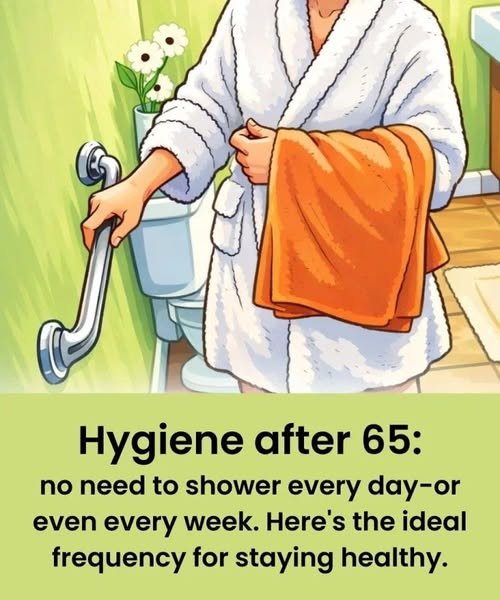
As we get older, our skin changes. It often becomes thinner, drier, and more sensitive, which means a long, hot shower every day may actually make dry or irritated skin worse.
But there is no single shower schedule that is perfect for everyone over 65. The ideal frequency depends on activity level, sweating, skin condition, weather, personal preference, and medical needs.
The important thing is to stay clean while avoiding unnecessary irritation of the skin.
Do You Need to Shower Every Day After 65?
Not necessarily.
For some older adults, showering every day is perfectly comfortable. For others, showering less frequently may help prevent excessive dryness.
The American Academy of Dermatology recommends that people with dry skin keep baths and showers relatively short—around 5 to 10 minutes—and use warm rather than hot water. (Académie Américaine de Dermatologie)
So instead of focusing only on the number of showers per week, pay attention to how your skin feels.
What Is a Reasonable Routine?
For a healthy older adult who isn’t sweating heavily or getting particularly dirty, a practical routine might be:
Shower every day if comfortable
Or shower every few days if the skin becomes very dry
Wash the face regularly
Clean areas such as the armpits and groin as needed
Wash hands frequently
Shower after heavy sweating, exercise, or significant dirt exposure
There is no universal rule saying that everyone over 65 should shower once, twice, or three times per week.
Why Can Frequent Hot Showers Be a Problem?
Hot water and long showers can remove some of the skin’s natural oils.
This can leave mature skin:
Dry
Tight
Itchy
Flaky
Irritated
Dermatologists recommend using warm rather than hot water and limiting shower time to help reduce dryness. (Académie Américaine de Dermatologie)
Use a mild, fragrance-free cleanser rather than harsh soap.
You don’t necessarily need to scrub your entire body aggressively. The AAD recommends using cleanser where it is needed, such as the armpits and groin area, when dealing with dry skin. (Académie Américaine de Dermatologie)
4. Don’t Scrub Too Hard
Rough scrubbing can irritate sensitive skin.
Use your hands or a soft cloth and wash gently.
5. Moisturize After Showering
After bathing, gently pat your skin dry rather than rubbing it vigorously.
Then apply a fragrance-free moisturizer while the skin is still slightly damp. This helps trap moisture in the skin. (Académie Américaine de Dermatologie)
What About Washing Hair?
Hair-washing frequency is different from body-washing frequency.
How often you should wash your hair depends on your scalp, hair type, oil production, and lifestyle.
If your scalp becomes oily or you sweat frequently, you may need to wash more often. If your scalp and hair are very dry, washing less frequently may be more comfortable.
When Should You Shower More Often?
You may need to bathe or shower more frequently if you:
Exercise regularly
Sweat heavily
Work outdoors
Live in a hot climate
Get dirty during the day
Have been swimming
Have a medical condition requiring specific hygiene instructions
Personal hygiene needs can vary considerably between individuals.
What If You Have Very Dry Skin?
If your skin is extremely dry, avoid long hot showers.
Try this routine:
Warm water → gentle cleanser → short shower → pat dry → moisturizer
Dermatologists specifically recommend applying moisturizer immediately after bathing while the skin is still damp. (Académie Américaine de Dermatologie)
Safety Matters Too
For older adults, bathroom safety is just as important as hygiene.
Wet floors can increase the risk of falls. Consider:
Non-slip bath mats
Grab bars
Good lighting
A shower chair if necessary
A handheld showerhead
Keeping frequently used items within easy reach
If getting into or out of the shower has become difficult, asking for assistance can help prevent injuries. The National Institute on Aging notes that bathing is one of the everyday activities where some older adults may need additional support. (NIA)
When Should You Talk to a Doctor?
Talk to a healthcare professional if you develop:
Persistent itching
Severe or unexplained dryness
Open sores
Recurrent skin infections
New rashes
Painful cracks in the skin
Significant changes in your skin
These symptoms may require more than simply changing your bathing routine.
Final Thoughts
Being over 65 does not mean you should stop showering regularly. At the same time, there is no need to force yourself to take a long, hot shower every day if it leaves your skin dry and irritated.
The best routine is the one that keeps you clean, comfortable, and safe while protecting your skin.
For many people, a short, warm shower combined with gentle cleansing and regular moisturizing is a good approach. (Académie Américaine de Dermatologie)
How often do you shower or bathe? Every day, every few days, or only when needed? 🛁👇
To provide the best experiences, we use technologies like cookies to store and/or access device information. Consenting to these technologies will allow us to process data such as browsing behavior or unique IDs on this site. Not consenting or withdrawing consent, may adversely affect certain features and functions.
Functional
Always active
The technical storage or access is strictly necessary for the legitimate purpose of enabling the use of a specific service explicitly requested by the subscriber or user, or for the sole purpose of carrying out the transmission of a communication over an electronic communications network.
Preferences
The technical storage or access is necessary for the legitimate purpose of storing preferences that are not requested by the subscriber or user.
Statistics
The technical storage or access that is used exclusively for statistical purposes.The technical storage or access that is used exclusively for anonymous statistical purposes. Without a subpoena, voluntary compliance on the part of your Internet Service Provider, or additional records from a third party, information stored or retrieved for this purpose alone cannot usually be used to identify you.
Marketing
The technical storage or access is required to create user profiles to send advertising, or to track the user on a website or across several websites for similar marketing purposes.