🌿 Neem Leaves for Eye Health: What Does the Evidence Really Say?
Neem contains many biologically active compounds, which is one reason it has been extensively studied.
Research has investigated neem for various biological effects, but interesting laboratory findings do not automatically mean that a homemade preparation is an effective or safe treatment for a human eye condition.
This distinction is particularly important when dealing with the eyes, because the cornea and other ocular tissues are extremely sensitive.
⚠️ Please Don’t Put Homemade Neem Juice Directly Into Your Eyes
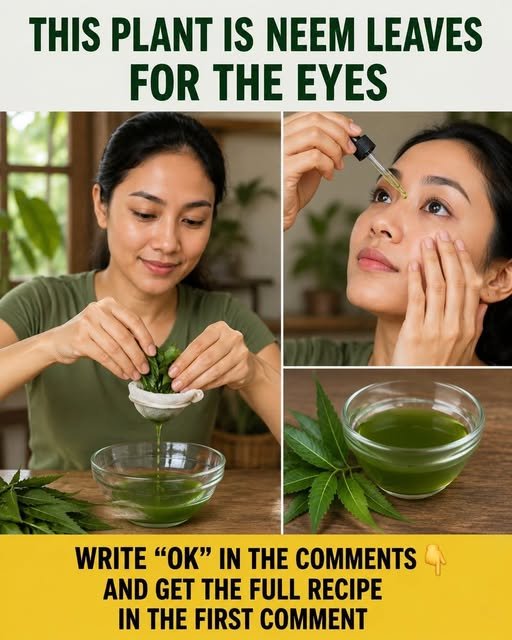
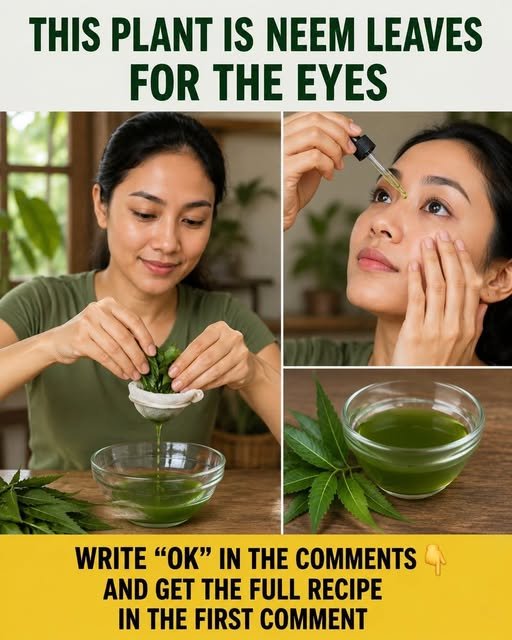
The image accompanying many viral posts shows people preparing liquid from neem leaves and applying it around or directly to the eye.
That is something to approach with caution.
Homemade liquids are not sterile eye drops. Introducing contaminated or irritating substances into the eye can cause inflammation, infection, or damage to the cornea.
Research has documented ocular toxicity from some herbal preparations, and ophthalmology literature warns that certain herbal substances can cause corneal toxicity. (PubMed)
Neem-derived substances themselves are not automatically harmless either. Studies evaluating neem preparations have reported toxic effects depending on the preparation and exposure. (PubMed)
🚨 Neem Oil Is Especially Different
Neem oil should not be treated as though it were simply the same thing as eating a small amount of neem leaf.
There are published reports of serious toxicity after neem-oil ingestion. One case report described severe neurological and visual complications following consumption of a large amount of neem oil. (PubMed)
Another medical report describes serious systemic toxicity associated with neem oil ingestion. (PubMed)
So a viral recipe involving neem oil or concentrated neem extracts should never be assumed to be safe simply because the ingredient is “natural.”
👓 What About People Who Wear Glasses?
Glasses correct refractive errors such as nearsightedness, farsightedness and astigmatism by changing how light is focused onto the retina.
A plant-based eye wash cannot reliably reshape the eye’s optics and eliminate a refractive error.
If your vision has changed, the safest approach is a proper eye examination. An eye-care professional can determine whether the problem is related to glasses, cataracts, glaucoma, dry eye, retinal disease, or another condition.
🥬 What Can You Do to Support Eye Health?
Instead of relying on a single “miracle” plant, focus on habits that support overall eye health.
🥗 Eat a varied diet
Vegetables, fruits, legumes, whole grains, nuts, fish and other nutrient-rich foods can contribute to a healthy diet.
🕶️ Protect your eyes
Good-quality sunglasses that provide appropriate UV protection can help reduce unnecessary UV exposure.
🚭 Don’t smoke
Smoking is associated with several serious eye diseases, so avoiding tobacco is an important part of protecting long-term vision.
🩺 Have regular eye examinations
Many eye diseases can develop without obvious symptoms in the early stages. Comprehensive eye examinations can help detect problems before significant vision loss occurs. (NCCIH)
🔬 What Does Science Actually Say About Supplements?
Interestingly, even commonly discussed antioxidant supplements haven’t been shown to prevent or reverse cataracts in the general population.
The NCCIH notes that large clinical studies have not found evidence that antioxidant vitamin supplements such as vitamins C and E or beta-carotene prevent or slow cataracts. (NCCIH)
This makes extraordinary claims about an unproven homemade neem preparation even more important to evaluate carefully.
🌿 Can Neem Still Be Enjoyed?
Neem has a long history of traditional use and remains an interesting plant from a botanical and cultural perspective.
But traditional use should not be confused with a clinically proven treatment for cataracts or vision loss.
If you enjoy learning about traditional plants, neem is certainly worth exploring—but eye diseases deserve proper diagnosis and evidence-based treatment.
Final Thoughts
The viral claim that neem leaves can make people with cataracts or poor eyesight no longer need eye doctors or glasses is not supported by reliable clinical evidence.
Most importantly, do not put homemade neem juice, neem oil, or other non-sterile plant preparations directly into your eyes. Eye injuries and infections can threaten vision, and delaying proper treatment can make some conditions worse. (PubMed)
Neem may be a fascinating traditional medicinal plant, but when it comes to your eyesight, it’s better to be cautious than to experiment.
👇 What do you think?
Have you ever heard of neem being used traditionally for eye health?
Share your experience or thoughts in the comments. 🌿👁️
Medical disclaimer: This article is for educational purposes only. It does not diagnose, treat, or cure eye disease and does not replace advice from an ophthalmologist or other qualified healthcare professional.
To provide the best experiences, we use technologies like cookies to store and/or access device information. Consenting to these technologies will allow us to process data such as browsing behavior or unique IDs on this site. Not consenting or withdrawing consent, may adversely affect certain features and functions.
Functional
Always active
The technical storage or access is strictly necessary for the legitimate purpose of enabling the use of a specific service explicitly requested by the subscriber or user, or for the sole purpose of carrying out the transmission of a communication over an electronic communications network.
Preferences
The technical storage or access is necessary for the legitimate purpose of storing preferences that are not requested by the subscriber or user.
Statistics
The technical storage or access that is used exclusively for statistical purposes.The technical storage or access that is used exclusively for anonymous statistical purposes. Without a subpoena, voluntary compliance on the part of your Internet Service Provider, or additional records from a third party, information stored or retrieved for this purpose alone cannot usually be used to identify you.
Marketing
The technical storage or access is required to create user profiles to send advertising, or to track the user on a website or across several websites for similar marketing purposes.