After a tick bite, watch your child for symptoms such as:
Fever
Rash
Headache
Unusual tiredness
Muscle aches
Joint pain or swelling
Other unexplained illness
The CDC advises contacting a healthcare provider if a rash or fever develops in the weeks following a tick bite and telling the provider about the recent tick exposure. (CDC)
Don’t wait for symptoms to become severe before seeking medical advice.
🦠 Does a Lone Star Tick Cause Lyme Disease?
This is an important point because not every tick species carries the same diseases.
The CDC’s tick reference identifies the lone star tick as a vector for ehrlichiosis, tularemia and STARI, while the blacklegged tick (Ixodes scapularis) is the major tick associated with Lyme disease in the northeastern and upper Midwestern United States. (CDC Stacks)
So identifying the tick can help healthcare professionals assess the situation—but geographic location and the circumstances of the bite matter too.
👨👩👧 When Should You Contact a Doctor?
Consider contacting your child’s healthcare provider if:
The tick was attached for an unknown length of time.
You aren’t sure whether the entire tick was removed.
Your child develops fever or a rash.
Your child becomes unusually tired or unwell.
The bite becomes increasingly red, painful or swollen.
You live in an area where tick-borne diseases are common.
You’re unsure what type of tick it was.
A healthcare professional can determine whether further evaluation or treatment is appropriate based on the tick species, location, attachment time and symptoms.
🌲 How to Prevent Future Tick Bites
After hiking, playing in tall grass or walking through wooded areas, make tick checks part of the routine.
Helpful precautions include:
Wear long pants when practical.
Stay on cleared trails.
Use an appropriate insect repellent.
Check children and pets after outdoor activities.
Shower after returning indoors.
Wash or dry outdoor clothing appropriately.
Check backpacks and outdoor equipment.
The CDC notes that frequent tick checks can help find ticks before they have more opportunity to transmit disease. (CDC)
🕷️ The Bottom Line
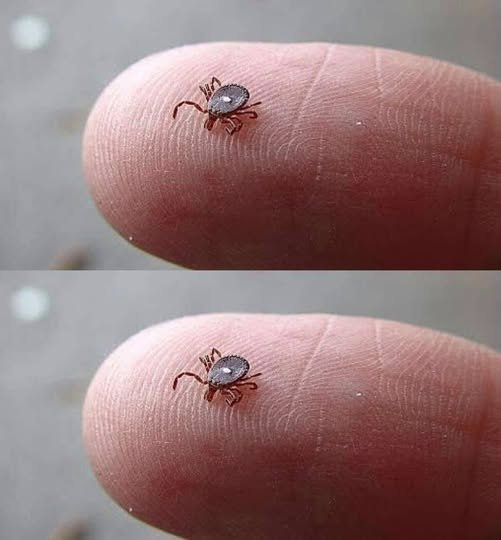
The unusual white spot in this photograph is consistent with the distinctive marking of a female lone star tick, but an image alone isn’t enough to make a definitive identification.
If this happened to your child, there’s no need to panic. Remove an attached tick promptly, clean the area, keep an eye out for symptoms, and contact a healthcare professional if anything concerning develops.
A tiny tick can look frightening under a magnifying lens, but knowing what to do makes the situation much easier to manage.
💬 Have you ever found a tick like this after a walk in the woods?
Did you recognize the white marking?
Share your experience below—your comment could help another parent know what to look for. 👇
Medical disclaimer: This article is for general educational purposes and does not diagnose or treat tick-borne diseases. If a child has been bitten by a tick and you are concerned, contact a qualified healthcare professional.
To provide the best experiences, we use technologies like cookies to store and/or access device information. Consenting to these technologies will allow us to process data such as browsing behavior or unique IDs on this site. Not consenting or withdrawing consent, may adversely affect certain features and functions.
Functional
Always active
The technical storage or access is strictly necessary for the legitimate purpose of enabling the use of a specific service explicitly requested by the subscriber or user, or for the sole purpose of carrying out the transmission of a communication over an electronic communications network.
Preferences
The technical storage or access is necessary for the legitimate purpose of storing preferences that are not requested by the subscriber or user.
Statistics
The technical storage or access that is used exclusively for statistical purposes.The technical storage or access that is used exclusively for anonymous statistical purposes. Without a subpoena, voluntary compliance on the part of your Internet Service Provider, or additional records from a third party, information stored or retrieved for this purpose alone cannot usually be used to identify you.
Marketing
The technical storage or access is required to create user profiles to send advertising, or to track the user on a website or across several websites for similar marketing purposes.