12 Signs That May Be Associated With Diabetes: What Your Feet Can and Cannot Tell You
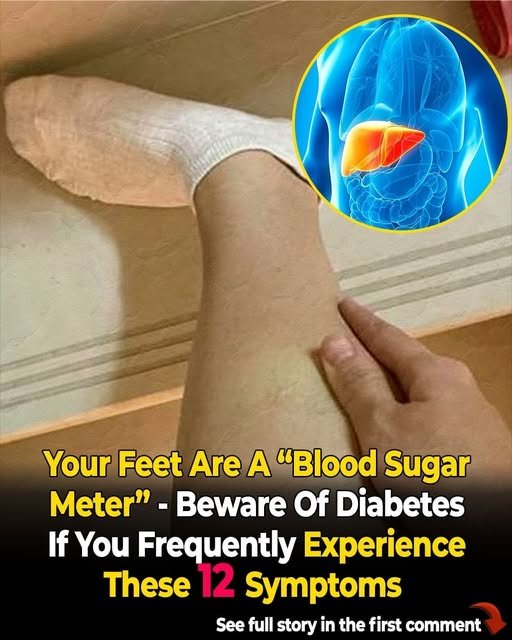
Your feet can sometimes provide important clues about your overall health. Diabetes can affect the nerves and blood vessels supplying the feet, particularly when blood glucose remains high over time. However, the viral claim that “your feet are a blood sugar meter” is misleading: looking at your feet cannot diagnose diabetes. A blood test is needed to determine whether you have diabetes. (Institut national du diabète et des maladies digestives et rénales)
12 Signs You Shouldn’t Ignore
Some symptoms can occur with diabetes, while others may indicate diabetes-related nerve or circulation problems.
Changes such as redness, swelling, unusual skin appearance, or foot sores deserve attention, particularly in someone who already has diabetes. Diabetes-related nerve and circulation problems can increase the risk of serious foot complications. (Institut national du diabète et des maladies digestives et rénales)
Why Diabetes Can Affect the Feet
Over time, high blood glucose can damage nerves and the small blood vessels that supply them.
Can You Diagnose Diabetes by Looking at Your Feet?
No.
Foot symptoms can have many different causes, and some people with type 2 diabetes have few or no noticeable symptoms at all. The only reliable way to determine whether someone has diabetes is through appropriate medical testing, such as blood glucose or HbA1c testing. (Institut national du diabète et des maladies digestives et rénales)
How to Protect Your Feet
If you have diabetes, taking care of your feet every day is especially important.
Well-fitting shoes can help reduce pressure and prevent injuries.
Keep Your Feet Clean and Dry
Wash your feet regularly and dry them carefully, especially between the toes.
Don’t Ignore Wounds
If you have diabetes and develop a foot wound that isn’t healing normally, contact your healthcare professional.
When Should You Get Tested for Diabetes?
If you have several symptoms such as increased thirst, frequent urination, fatigue, blurred vision, unexplained weight loss, or numbness and tingling, it’s worth discussing diabetes testing with a healthcare professional. (Institut national du diabète et des maladies digestives et rénales)
Don’t wait for your feet to show obvious changes before getting checked.
If you’re experiencing persistent symptoms, the best next step is a proper medical evaluation and blood test rather than relying on visual signs alone.
Take a moment today to check your feet. If you notice a persistent wound, swelling, numbness, or unusual changes, don’t ignore it. 🦶❤️
Important: This article is for educational purposes only and does not replace medical advice or diagnostic testing.
To provide the best experiences, we use technologies like cookies to store and/or access device information. Consenting to these technologies will allow us to process data such as browsing behavior or unique IDs on this site. Not consenting or withdrawing consent, may adversely affect certain features and functions.
Functional
Always active
The technical storage or access is strictly necessary for the legitimate purpose of enabling the use of a specific service explicitly requested by the subscriber or user, or for the sole purpose of carrying out the transmission of a communication over an electronic communications network.
Preferences
The technical storage or access is necessary for the legitimate purpose of storing preferences that are not requested by the subscriber or user.
Statistics
The technical storage or access that is used exclusively for statistical purposes.The technical storage or access that is used exclusively for anonymous statistical purposes. Without a subpoena, voluntary compliance on the part of your Internet Service Provider, or additional records from a third party, information stored or retrieved for this purpose alone cannot usually be used to identify you.
Marketing
The technical storage or access is required to create user profiles to send advertising, or to track the user on a website or across several websites for similar marketing purposes.