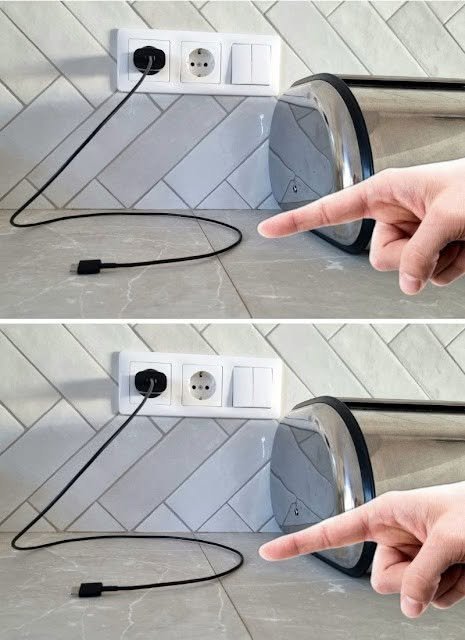
Should You Unplug Your Charger When You’re Not Using It? 3 Things You Should Know
Cracked plastic
Frayed cables
Exposed wires
Burn marks
Loose pins
Buzzing or crackling
Unusual smells
Excessive heat
Sparking
If you notice any of these signs, stop using the charger and unplug it. Electrical Safety First specifically recommends checking chargers, plugs, and sockets for damage and signs of overheating or arcing. (Electrical Safety First)
⚡ Reason #2: Heat Is Something You Shouldn’t Ignore
Electrical devices naturally produce some heat.
A charger that becomes noticeably hot can indicate a problem, particularly if the heat is excessive or unusual.
Heat can become more concerning when a charger is:
Covered by clothing
Trapped behind furniture
Sitting on bedding
Exposed to direct sunlight
Used in a poorly ventilated area
Electrical Safety First recommends keeping chargers uncovered and well ventilated. It also advises charging phones and tablets on a hard, stable, flat surface rather than on beds or other soft furnishings where heat can become trapped. (Electrical Safety First)
🏠 Reason #3: Unplugging Reduces Unnecessary Risks When You’re Away
If you’re leaving your home for an extended period, unplugging unnecessary electrical devices is a sensible precaution.
Electrical Safety First recommends turning off electrical appliances when they’re not being used, particularly at night, because electrical fires can spread unnoticed while people are asleep. (Electrical Safety First)
This doesn’t mean that a properly manufactured phone charger will inevitably cause a fire simply because you forgot to unplug it.
Instead, think of unplugging as one simple way to reduce unnecessary electrical risks, especially if the charger is old, damaged, or of uncertain quality.
📱 What If the Phone Is Still Charging?
This is a slightly different situation.
When a phone is connected, the charger is actively supplying power to the device.
Modern phones have sophisticated charging systems, but that doesn’t mean you should ignore basic charging safety.
Electrical Safety First recommends unplugging the device after charging and avoiding prolonged charging when it isn’t necessary. (Electrical Safety First)
The National Fire Protection Association also advises unplugging devices when they’re fully charged and using the charger supplied with the device or one approved by the manufacturer. (content.nfpa.org)
🚫 Never Charge Under a Pillow or Blanket
This is one of the most important practical tips.
Don’t place your phone or charger:
Under your pillow
Under a blanket
Between cushions
On a bed
Under clothing
These materials can restrict airflow and trap heat.
Instead, charge your device on a hard, flat surface where heat can dissipate. (Electrical Safety First)
🛒 Don’t Buy the Cheapest Charger You Can Find
A charger may look perfectly normal from the outside while containing poor-quality components inside.
Counterfeit and substandard chargers can lack adequate insulation and other important safety features.
Electrical Safety First recommends purchasing chargers from reputable retailers and avoiding counterfeit or suspiciously cheap products. (Electrical Safety First)
When buying a replacement charger, look for a reputable manufacturer and make sure the charger is compatible with your device.
🔍 Check Your Charger Right Now
Take a few seconds to inspect the charger you use every day.
Ask yourself:
Does it feel unusually hot?
Is the cable damaged?
Is the plug cracked?
Are there burn marks around the socket?
Does it make a buzzing or crackling sound?
Does it smell unusual?
If the answer to any of these is yes, don’t ignore it.
Unplug it and replace it with a safe, compatible charger. If the problem appears to involve the wall socket itself, contact a qualified electrician or appropriate repair professional. (Electrical Safety First)
💡 So, Should You Always Unplug Your Charger?
Here’s the balanced answer:
Unplugging an unused charger is a good safety habit, but it’s misleading to say that every charger left plugged into an outlet is automatically a fire hazard.
Modern, reputable chargers are designed with safety protections, and the risk is generally much more concerning when the charger is damaged, counterfeit, poorly manufactured, overheating, or used incorrectly.
Still, if you’re not using the charger, there’s little reason to leave it plugged in unnecessarily.
Unplug it.
It’s simple, costs nothing, and eliminates that device from the list of electrical equipment connected to your home.
🏡 A Simple Electrical Safety Routine
Before going to bed or leaving home, make a quick check:
✔️ Unplug damaged chargers
✔️ Disconnect unnecessary devices
✔️ Keep chargers away from water
✔️ Never cover chargers while they’re operating
✔️ Keep charging devices on hard surfaces
✔️ Replace frayed cables
✔️ Avoid counterfeit chargers
✔️ Don’t ignore burning smells, sparks, or excessive heat
These small habits can make your home safer.
Final Thoughts
The viral claim that you should “never leave a charger in an outlet without your phone” is too absolute.
A modern, quality charger doesn’t suddenly become dangerous simply because the phone isn’t connected.
However, unplugging unused chargers is a sensible habit, particularly when the charger is old, damaged, unusually hot, or of questionable quality.
The most important lesson isn’t simply “unplug every charger.”
It’s:
Use good-quality equipment, inspect it regularly, keep it ventilated, and don’t ignore warning signs. (Electrical Safety First)
🔌 Take a Look Around Your Home
How many chargers do you currently have plugged into your outlets—even though nothing is connected to them?
Are you someone who unplugs everything before going to bed, or do you leave your chargers plugged in all the time?
To provide the best experiences, we use technologies like cookies to store and/or access device information. Consenting to these technologies will allow us to process data such as browsing behavior or unique IDs on this site. Not consenting or withdrawing consent, may adversely affect certain features and functions.
Functional
Always active
The technical storage or access is strictly necessary for the legitimate purpose of enabling the use of a specific service explicitly requested by the subscriber or user, or for the sole purpose of carrying out the transmission of a communication over an electronic communications network.
Preferences
The technical storage or access is necessary for the legitimate purpose of storing preferences that are not requested by the subscriber or user.
Statistics
The technical storage or access that is used exclusively for statistical purposes.The technical storage or access that is used exclusively for anonymous statistical purposes. Without a subpoena, voluntary compliance on the part of your Internet Service Provider, or additional records from a third party, information stored or retrieved for this purpose alone cannot usually be used to identify you.
Marketing
The technical storage or access is required to create user profiles to send advertising, or to track the user on a website or across several websites for similar marketing purposes.