What Is This Thing? The Mysterious Wooden Ford Box Found in an Old Building
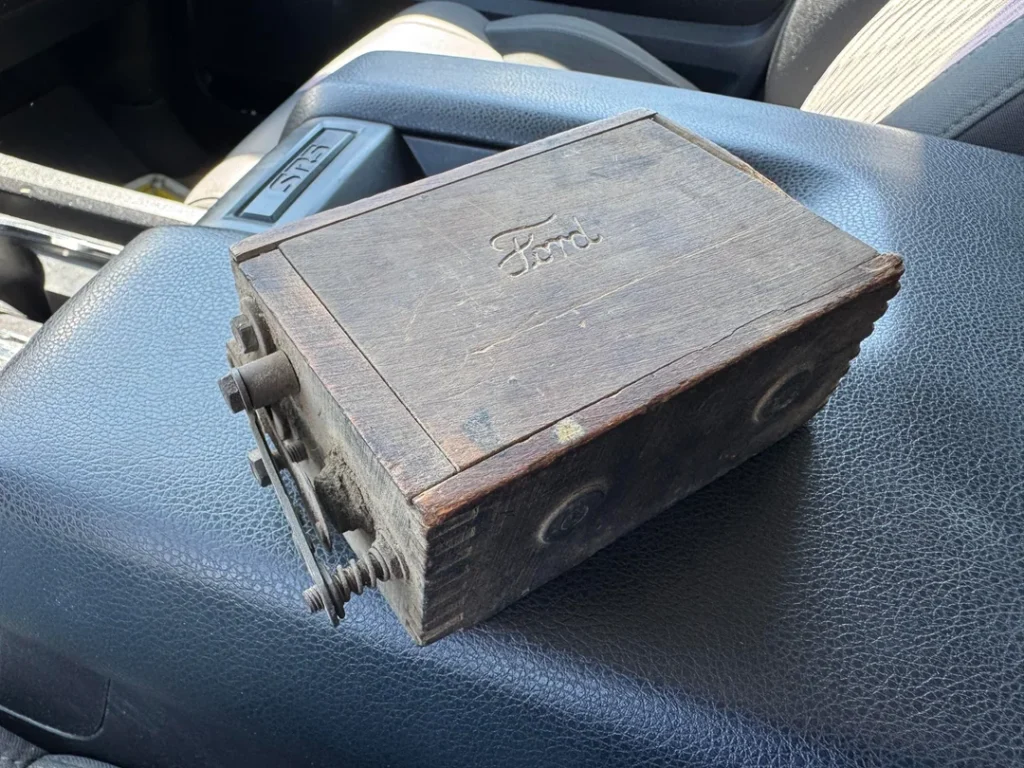
At first glance, this old wooden box looks like some kind of antique electrical device or mechanical component. The Ford name stamped into the top is the biggest clue—but what exactly was it used for?
The answer takes us back more than a century, to the early days of automobile engineering.
This is an ignition coil from a Ford Model T, commonly known as a Model T trembler coil or “buzz coil.” These small wooden-cased devices were an essential part of the Model T’s ignition system. (Science Museum Group Collection)
🚗 A Small Box With a Very Important Job
The Ford Model T was produced from 1908 to 1927, and its ignition system was quite different from the systems found in modern cars.
Instead of using a modern distributor and individual electronic ignition coils, the Model T used four separate ignition coils—one for each cylinder.
That means this seemingly ordinary wooden box was actually responsible for helping produce the electrical spark needed to ignite the fuel inside one cylinder of the engine.
⚡ How Did a Model T Ignition Coil Work?
The device used what is known as a trembler coil.
When electrical current from the car’s battery passed through the coil, it created a magnetic field. That magnetic field pulled a small armature, which opened the electrical contacts.
When the contacts opened, the magnetic field collapsed and produced a much higher voltage in the secondary winding.
The process happened repeatedly, creating the characteristic rapid buzzing sound that gave these devices their nickname: “buzz coils.” (World Radio History)
To provide the best experiences, we use technologies like cookies to store and/or access device information. Consenting to these technologies will allow us to process data such as browsing behavior or unique IDs on this site. Not consenting or withdrawing consent, may adversely affect certain features and functions.
Functional
Always active
The technical storage or access is strictly necessary for the legitimate purpose of enabling the use of a specific service explicitly requested by the subscriber or user, or for the sole purpose of carrying out the transmission of a communication over an electronic communications network.
Preferences
The technical storage or access is necessary for the legitimate purpose of storing preferences that are not requested by the subscriber or user.
Statistics
The technical storage or access that is used exclusively for statistical purposes.The technical storage or access that is used exclusively for anonymous statistical purposes. Without a subpoena, voluntary compliance on the part of your Internet Service Provider, or additional records from a third party, information stored or retrieved for this purpose alone cannot usually be used to identify you.
Marketing
The technical storage or access is required to create user profiles to send advertising, or to track the user on a website or across several websites for similar marketing purposes.