How to Keep Bananas Fresh for Longer: Simple Storage Tricks That Work
One simple trick is to separate individual bananas from the bunch once they’re close to the ripeness you prefer.
This can make it easier to manage them individually and may reduce the concentration of ethylene around a tightly packed bunch.
It also means you can eat the ripest bananas first rather than having the entire bunch reach the same stage simultaneously.
🧻 The Popular Stem-Wrapping Trick
You’ve probably seen the viral tip suggesting that you should wrap the banana stems with plastic wrap.
The idea is to reduce the amount of ethylene escaping from the stem area.
Some people find this helpful, although it isn’t a magic method that will literally make bananas last 10 days longer in every kitchen.
If you want to try it, wrap the crown of the bunch or individual stems snugly with a small piece of plastic wrap.
Check the bananas regularly and remove any damaged fruit.
❄️ What About the Refrigerator?
Once bananas have reached the ripeness you like, refrigeration can be useful.
The peel may turn dark or brown in the refrigerator, but the fruit inside can remain perfectly edible.
This is an important distinction:
A dark banana peel doesn’t automatically mean the banana has gone bad.
If the inside still smells normal and has a good texture, it may still be suitable for eating.
However, putting very green bananas in the refrigerator isn’t generally recommended because cold temperatures can interfere with normal ripening.
🍎 Keep Bananas Away From Certain Fruits
If you’re trying to slow down ripening, consider where you place your bananas.
Apples, pears, avocados, peaches, and several other fruits also produce ethylene.
Keeping large quantities of ethylene-producing fruits together can accelerate ripening.
If your goal is to keep bananas yellow for as long as possible, give them their own space.
🌬️ Good Airflow Matters
Don’t trap bananas inside a sealed plastic bag.
Poor ventilation can encourage moisture buildup and may contribute to premature spoilage.
A fruit bowl, banana hanger, or another well-ventilated location is generally preferable.
Hanging bananas can also prevent pressure marks caused by resting the fruit against a hard surface.
🧺 What Is the Best Place to Store Them?
A simple countertop can work very well.
Choose an area away from:
Direct sunlight
Heat
Humidity
Appliances that generate warmth
Other ripe fruit
If your kitchen gets particularly warm, you’ll probably notice bananas ripening faster than they do in a cooler environment.
🟡 Don’t Wait Until They’re Perfectly Yellow
If you know you won’t eat the whole bunch quickly, consider buying bananas at different stages of ripeness.
For example:
Green → Yellow-green → Yellow → Yellow with spots
This gives you several days of bananas at different stages instead of having the entire bunch become ripe simultaneously.
🥤 What to Do With Overripe Bananas
Even if your bananas become too soft to eat out of hand, don’t automatically throw them away.
Overripe bananas are excellent for:
Banana Bread
The extra sweetness and softness can make them ideal for baking.
Smoothies
Blend them with yogurt, milk, oats, or other fruit.
Pancakes
Mashed banana can add sweetness and moisture to pancake batter.
Frozen Bananas
Peel them, cut them into pieces, and freeze them for later.
Frozen banana can be blended into smoothies or used to make creamy frozen desserts.
⚠️ When Should You Throw a Banana Away?
Brown spots alone aren’t necessarily a problem.
But discard a banana if it has signs of spoilage such as:
Visible mold
A strong unpleasant odor
Significant leaking
Very unusual discoloration inside
A slimy or decomposed texture
When in doubt, it’s better to discard questionable fruit.
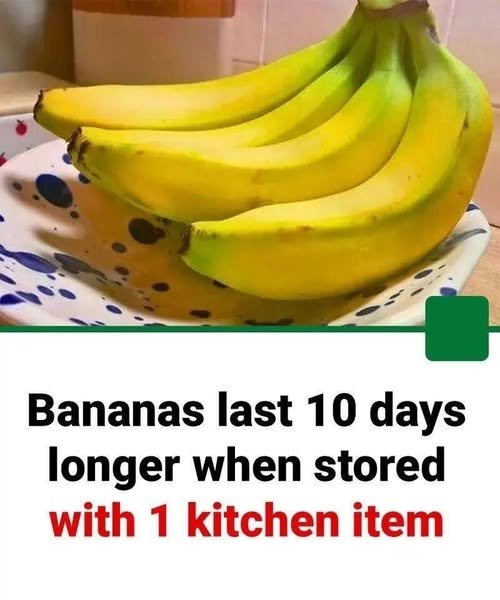
🍌 So, What Is the “One Kitchen Item”?
The viral image suggests that one simple kitchen item can make bananas last much longer.
The most commonly promoted trick is plastic wrap around the banana stems.
This technique may help slow ripening somewhat by reducing ethylene exposure around the crown, but claims that it will reliably make bananas last exactly 10 days longer are exaggerated.
There isn’t one magic household item that guarantees a specific shelf life.
Storage conditions matter much more.
Final Thoughts
If you want your bananas to stay fresh for as long as possible, focus on a combination of simple habits:
✔️ Keep them away from heat
✔️ Give them good airflow
✔️ Separate the bunch when appropriate
✔️ Consider wrapping the stems
✔️ Keep them away from other ripening fruit
✔️ Refrigerate them once they’re ripe
✔️ Freeze extras before they spoil
The biggest secret isn’t a complicated trick.
It’s simply controlling the environment around your bananas and using them according to their stage of ripeness.
🍌 What’s Your Banana Storage Trick?
Do you wrap the stems, hang your bananas, refrigerate them—or simply eat them before they have a chance to turn brown?
Share your favorite banana-storage tip in the comments! 👇
To provide the best experiences, we use technologies like cookies to store and/or access device information. Consenting to these technologies will allow us to process data such as browsing behavior or unique IDs on this site. Not consenting or withdrawing consent, may adversely affect certain features and functions.
Functional
Always active
The technical storage or access is strictly necessary for the legitimate purpose of enabling the use of a specific service explicitly requested by the subscriber or user, or for the sole purpose of carrying out the transmission of a communication over an electronic communications network.
Preferences
The technical storage or access is necessary for the legitimate purpose of storing preferences that are not requested by the subscriber or user.
Statistics
The technical storage or access that is used exclusively for statistical purposes.The technical storage or access that is used exclusively for anonymous statistical purposes. Without a subpoena, voluntary compliance on the part of your Internet Service Provider, or additional records from a third party, information stored or retrieved for this purpose alone cannot usually be used to identify you.
Marketing
The technical storage or access is required to create user profiles to send advertising, or to track the user on a website or across several websites for similar marketing purposes.