How to Clean Dirty Pots and Pans Naturally: A Simple Method That Really Works
Drain most of the water, leaving the surface damp.
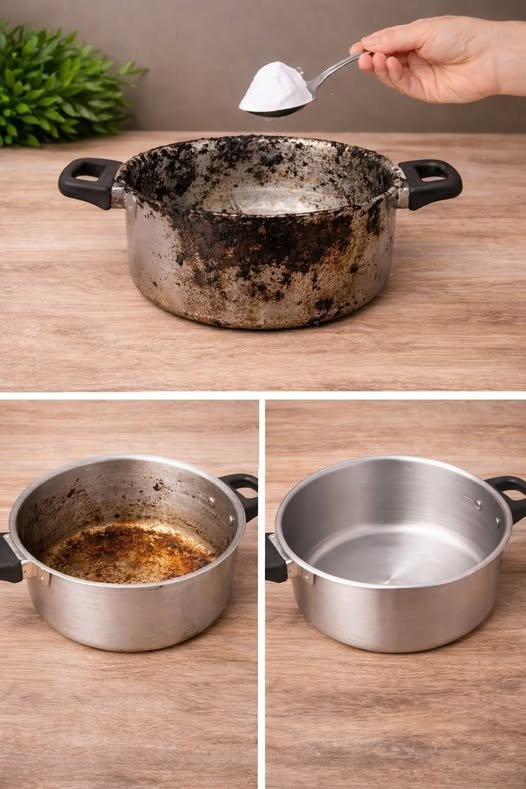
Sprinkle 2–3 tablespoons of baking soda over the affected areas.
For a concentrated treatment, mix baking soda with a small amount of water to create a thick paste.
The paste should be spreadable rather than watery.
🧼 Step 4: Let the Paste Work
Spread the baking-soda paste over the dark or burnt areas.
Let it sit for approximately 15–30 minutes.
For extremely stubborn residue, you can leave the paste longer and repeat the process rather than trying to remove everything with excessive force.
This gives the baking soda time to loosen grime before you start scrubbing.
🧽 Step 5: Scrub Gently
Use a soft sponge or non-abrasive scrubber.
Work in small circular motions over the stained areas.
You may notice dark residue gradually lifting from the surface.
For heavy buildup, rinse the pot and repeat the baking-soda treatment rather than using an extremely abrasive pad.
✨ Step 6: Rinse Thoroughly
Once the stains have been removed, rinse the pot thoroughly with warm water.
Make sure no baking soda or loosened residue remains.
Then wash the pot normally with dish soap.
Finally, dry it with a clean towel to prevent water spots.
🍋 What About White Vinegar?
White vinegar can also be useful for certain mineral deposits and water stains, particularly on stainless steel.
However, you don’t need to create a dramatic baking soda-and-vinegar reaction.
When vinegar and baking soda are mixed together, they fizz because an acid-base reaction produces carbon dioxide. Once that reaction is finished, much of the cleaning power of the two ingredients has been neutralized.
For that reason, it’s often more useful to use them separately for different cleaning jobs.
🔥 For Extremely Burnt Pots
If the bottom of the pot has a thick layer of burned food, try this method:
Add enough water to cover the burned area.
Add a few drops of dish soap.
Add 1–2 tablespoons of baking soda.
Bring the mixture to a gentle simmer.
Let it simmer for several minutes.
Turn off the heat and allow it to cool.
Gently loosen the residue with a wooden or silicone utensil.
Wash and rinse thoroughly.
You may need to repeat the process for very old buildup.
🧂 Can Salt Help?
Salt can provide mild physical scrubbing, but it isn’t necessary for most cleaning jobs.
If you use it, avoid aggressively rubbing coarse salt against delicate or coated cookware.
The safest approach is generally to start with the gentlest method and increase the cleaning effort only when necessary.
⚠️ Be Careful With Nonstick Cookware
Not every pot should be treated the same way.
If you’re cleaning a nonstick pan, avoid aggressive scrubbing, steel wool, metal utensils, and harsh abrasive cleaners.
Damaging the coating can reduce the pan’s performance and potentially cause the coating to peel.
For nonstick cookware, warm water, dish soap, and a soft sponge are usually the better starting point.
⚠️ What About Cast Iron?
Cast iron requires different care.
Avoid treating a well-seasoned cast-iron pan like stainless steel and soaking it for long periods.
After cleaning, cast iron should be dried thoroughly and lightly maintained according to the manufacturer’s recommendations.
The baking-soda method shown here is much more appropriate for many stainless-steel and other compatible cookware surfaces.
🌟 Why Baking Soda Is So Popular for Cleaning
Baking soda is inexpensive, easy to find, and mildly abrasive.
That makes it useful for helping remove surface grime without relying on extremely harsh scrubbing.
It can be particularly handy when a pot has:
Burnt food
Greasy residue
Dark cooking stains
Dried-on sauce
Food stuck to the bottom
However, “natural” doesn’t automatically mean that something is suitable for every material. Always consider the cookware’s surface before trying a new cleaning method.
🧼 Prevention Is Easier Than Scrubbing
One of the best ways to keep pots looking clean is to avoid allowing food residue to dry onto them.
After cooking:
Let the pot cool safely.
Remove leftover food.
Soak stuck-on residue in warm water.
Wash the pot as soon as practical.
Dry stainless steel after washing.
A few minutes of attention after cooking can save you from dealing with a thick layer of burned residue later.
🏠 A Simple Natural Cleaning Routine
For everyday cookware, you don’t need a complicated collection of cleaning products.
A practical routine is:
Warm water → dish soap → baking soda for stubborn stains → gentle scrubbing → thorough rinsing.
If mineral deposits remain, white vinegar can be used separately where appropriate.
The key is to match the cleaning method to the cookware material.
Final Thoughts
A badly stained pot doesn’t necessarily need to be thrown away.
For many compatible cookware surfaces, baking soda, warm water, dish soap, and gentle scrubbing can make a noticeable difference.
The most important thing is patience. Very stubborn burnt residue may require several treatments, and trying to remove everything in one aggressive scrubbing session can damage the cookware.
Before reaching for a harsh chemical cleaner, try the gentlest method first.
Sometimes a pot that looks completely ruined just needs a little time, a little baking soda, and some elbow grease. ✨
👇 Have You Tried This?
What’s the hardest stain you’ve ever had to remove from a pot or pan?
Burnt food, grease, black stains, or something else?
Share your best kitchen-cleaning trick in the comments! 🧽👇
To provide the best experiences, we use technologies like cookies to store and/or access device information. Consenting to these technologies will allow us to process data such as browsing behavior or unique IDs on this site. Not consenting or withdrawing consent, may adversely affect certain features and functions.
Functional
Always active
The technical storage or access is strictly necessary for the legitimate purpose of enabling the use of a specific service explicitly requested by the subscriber or user, or for the sole purpose of carrying out the transmission of a communication over an electronic communications network.
Preferences
The technical storage or access is necessary for the legitimate purpose of storing preferences that are not requested by the subscriber or user.
Statistics
The technical storage or access that is used exclusively for statistical purposes.The technical storage or access that is used exclusively for anonymous statistical purposes. Without a subpoena, voluntary compliance on the part of your Internet Service Provider, or additional records from a third party, information stored or retrieved for this purpose alone cannot usually be used to identify you.
Marketing
The technical storage or access is required to create user profiles to send advertising, or to track the user on a website or across several websites for similar marketing purposes.