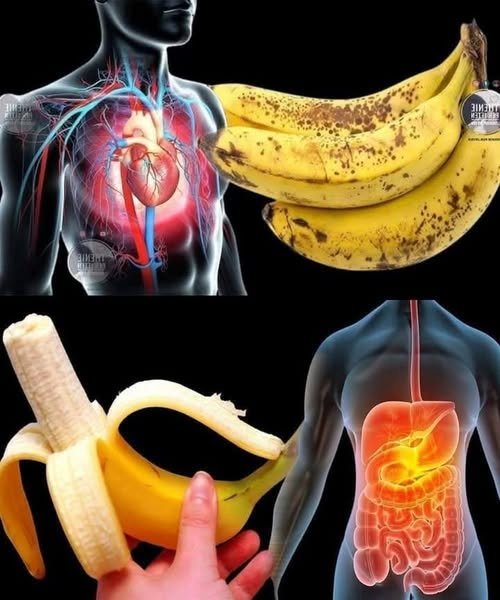
Bananas contain naturally occurring carbohydrates, making them a convenient snack before a walk, workout, or busy day.
They’re also easy to combine with other nutritious foods.
Try adding sliced banana to:
Oatmeal
Greek yogurt
Whole-grain toast
Smoothies
Nut butter
Breakfast bowls
🍌 Does Ripeness Matter?
Yes.
As bananas ripen, their texture, sweetness, and carbohydrate composition change. Green bananas contain more resistant starch, while ripe bananas become softer and sweeter.
That means people may prefer different stages of ripeness depending on taste and how they use the fruit.
⚠️ One Important Point About Potassium
More potassium isn’t always better.
People with certain kidney conditions or those taking particular medications may need to monitor their potassium intake. The NIH specifically advises people with kidney disease or those taking certain medications to speak with a healthcare professional before using potassium-containing salt substitutes. (ODS)
So bananas can be a healthy food for many people, but individual dietary needs matter.
🍽️ How Many Bananas Should You Eat?
There isn’t a universal number that everyone should eat each day.
A banana can simply be one serving of fruit within a varied diet.
Remember that one banana alone cannot provide all the potassium or other nutrients your body needs. The NIH recommends getting potassium from a variety of foods rather than relying on bananas alone. (ODS)
The Bottom Line
Bananas are much more than a sweet snack.
They provide potassium, fiber, and carbohydrates, making them a convenient addition to a balanced diet. Potassium supports normal heart, nerve, kidney, and muscle function, while fiber contributes to digestive health. (ODS)
However, bananas aren’t a miracle food or a treatment for disease. Their benefits are best understood as part of an overall healthy eating pattern.
🍌 Do You Eat Bananas Every Day?
Do you prefer them green, yellow, or covered with brown spots?
Share your favorite way to eat bananas in the comments! 👇
To provide the best experiences, we use technologies like cookies to store and/or access device information. Consenting to these technologies will allow us to process data such as browsing behavior or unique IDs on this site. Not consenting or withdrawing consent, may adversely affect certain features and functions.
Functional
Always active
The technical storage or access is strictly necessary for the legitimate purpose of enabling the use of a specific service explicitly requested by the subscriber or user, or for the sole purpose of carrying out the transmission of a communication over an electronic communications network.
Preferences
The technical storage or access is necessary for the legitimate purpose of storing preferences that are not requested by the subscriber or user.
Statistics
The technical storage or access that is used exclusively for statistical purposes.The technical storage or access that is used exclusively for anonymous statistical purposes. Without a subpoena, voluntary compliance on the part of your Internet Service Provider, or additional records from a third party, information stored or retrieved for this purpose alone cannot usually be used to identify you.
Marketing
The technical storage or access is required to create user profiles to send advertising, or to track the user on a website or across several websites for similar marketing purposes.