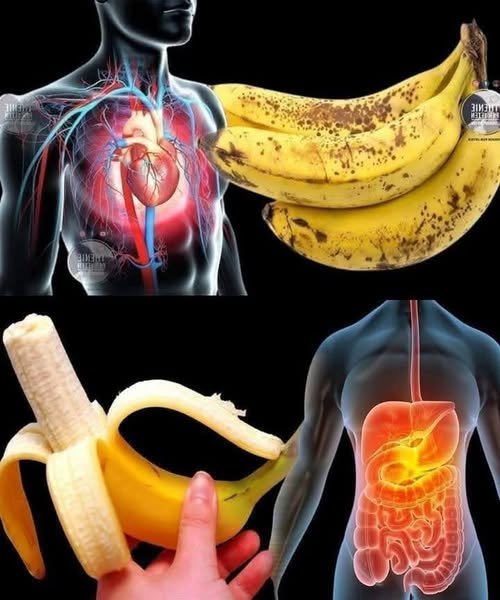
Bananas are one of the simplest fruits to add to your daily diet, but they provide several important nutrients that support normal body functions. Their naturally sweet flavor and convenient packaging make them a popular choice for breakfast, snacks and smoothies.
But what exactly can eating bananas “increase”? The answer isn’t a miracle cure—it comes down to potassium, fiber, carbohydrates and other nutrients that your body needs.
🍌 1. Bananas Increase Your Potassium Intake
Bananas are well known for their potassium content.
Potassium is an essential mineral that helps your body maintain normal fluid balance, muscle function and nerve signaling. It also plays an important role in maintaining normal blood pressure.
A medium banana provides a meaningful amount of potassium as part of a balanced diet.
❤️ 2. They Support Normal Heart Function
Potassium is important for normal muscle function, including the heart.
A diet that contains plenty of potassium-rich foods can be part of an overall heart-healthy eating pattern. Bananas can contribute to that intake, although eating bananas alone cannot prevent or treat heart disease.
🦵 3. They Provide Nutrients Important for Muscles
Your muscles need potassium and other electrolytes to function normally.
Bananas also provide carbohydrates, which your body can use as an energy source. That’s one reason bananas are popular among people who want a convenient snack before or after physical activity.
🌱 4. They Increase Your Fiber Intake
Bananas contain dietary fiber, which supports normal digestive function.
A medium banana provides several grams of fiber, and eating a variety of fruits, vegetables, whole grains and legumes is an effective way to increase overall fiber intake.
If you’re increasing fiber substantially, do it gradually and drink enough fluids.
🦠 5. They Contain Prebiotic-Type Carbohydrates
Bananas contain carbohydrates that can be utilized by beneficial bacteria in the gut.
Less-ripe bananas contain more resistant starch, while ripe bananas contain more readily available sugars. This means the nutritional profile changes as a banana ripens.
⚡ 6. They Provide Quick Energy
Bananas contain naturally occurring carbohydrates, including glucose, fructose and sucrose.
Because of this, they can provide a convenient source of energy, particularly when eaten before physical activity or alongside other foods.
🍌 What Happens If You Eat a Banana Every Day?
For most healthy people, including a banana in a varied diet is perfectly reasonable.
You may benefit from:
More potassium in your diet
Additional dietary fiber
Vitamin B6
Vitamin C
Naturally occurring carbohydrates
A convenient, filling snack
But more isn’t always better. Eating bananas doesn’t automatically lower blood pressure, clean arteries, burn fat or cure digestive problems.
The overall quality of your diet matters much more than any single food.
🍌 Ripe or Green Banana?
Interestingly, the ripeness of the banana changes its carbohydrate composition.
🟢 Less-ripe banana
Contains more resistant starch and tends to be firmer and less sweet.
🟡 Ripe banana
Contains more readily digestible sugars and is softer and sweeter.
Both can fit into a healthy diet—the better choice depends on your taste and dietary needs.
⚠️ One Important Exception
People with kidney disease or conditions that require potassium restriction may need to limit high-potassium foods, including bananas.
If you’ve been told to restrict potassium, follow your healthcare professional’s dietary advice rather than assuming that a food is safe simply because it is natural.
❤️ The Bottom Line
Bananas don’t have a secret ability to transform your body overnight.
What they can do is provide useful nutrients—especially potassium, fiber, vitamin B6 and carbohydrates—that contribute to normal heart, muscle, nerve and digestive function.
So the next time you peel a banana, remember:
🍌 Small fruit, useful nutrients, simple addition to a balanced diet.
This article is for general educational information and does not replace personalized medical advice.
To provide the best experiences, we use technologies like cookies to store and/or access device information. Consenting to these technologies will allow us to process data such as browsing behavior or unique IDs on this site. Not consenting or withdrawing consent, may adversely affect certain features and functions.
Functional
Always active
The technical storage or access is strictly necessary for the legitimate purpose of enabling the use of a specific service explicitly requested by the subscriber or user, or for the sole purpose of carrying out the transmission of a communication over an electronic communications network.
Preferences
The technical storage or access is necessary for the legitimate purpose of storing preferences that are not requested by the subscriber or user.
Statistics
The technical storage or access that is used exclusively for statistical purposes.The technical storage or access that is used exclusively for anonymous statistical purposes. Without a subpoena, voluntary compliance on the part of your Internet Service Provider, or additional records from a third party, information stored or retrieved for this purpose alone cannot usually be used to identify you.
Marketing
The technical storage or access is required to create user profiles to send advertising, or to track the user on a website or across several websites for similar marketing purposes.