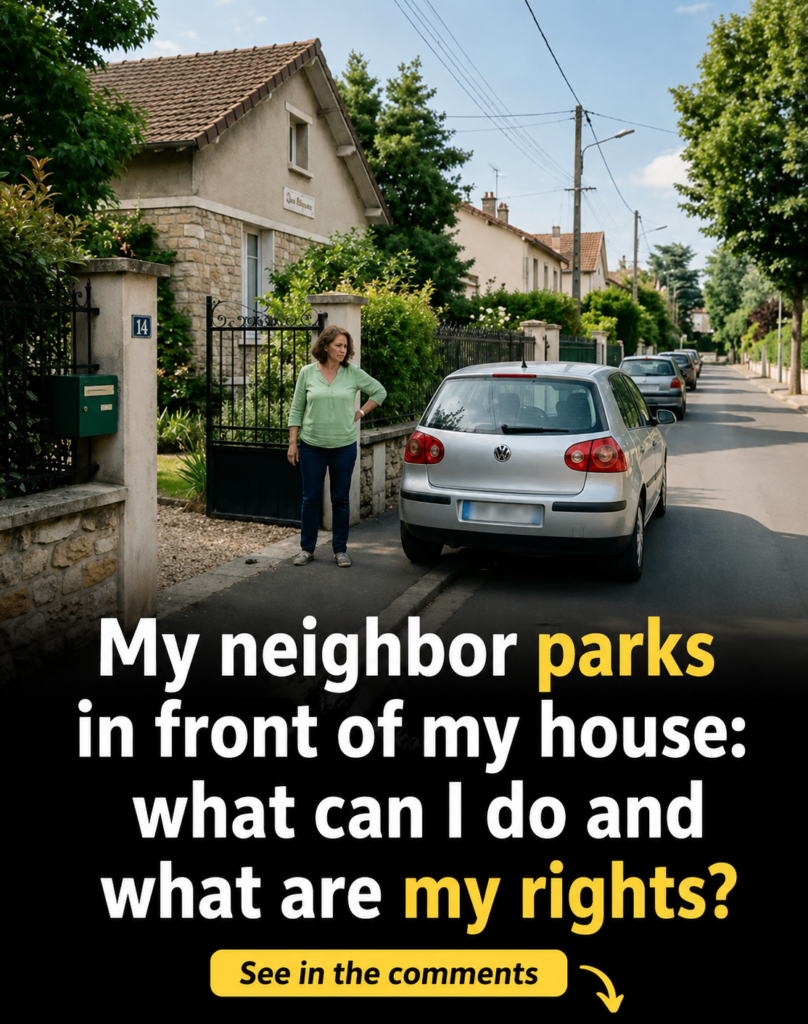
My Neighbor Parks in Front of My House: What Can I Do and What Are My Rights?
It’s a situation that frustrates many homeowners: you come home to find your neighbor’s car parked directly in front of your house. While it may feel unfair, the legal answer often depends on local parking laws and whether the space is part of a public street or private property.
Before taking action, it’s important to understand your rights and the best ways to resolve the issue peacefully.
Is the Parking Space Public or Private?
The first question to ask is:
Is the vehicle parked on a public street or on private property?
If it’s on a public street, the parking space generally belongs to everyone, provided the vehicle is parked legally.
If the vehicle is blocking:
Your driveway
A fire hydrant
A crosswalk
A designated no-parking zone
then local authorities may be able to take action.
Do Homeowners Own the Space in Front of Their House?
In many countries, homeowners do not automatically own the parking space on the public street in front of their property.
Unless there are special permits or local regulations, anyone may usually park there if they follow traffic laws.
However, laws vary depending on the country, state, province, or municipality.
What Should You Do First?
Before contacting authorities, consider these steps:
1. Stay Calm
Parking disputes can quickly escalate. Approach the situation politely and avoid confrontation.
2. Talk to Your Neighbor
Many parking problems are simple misunderstandings.
A friendly conversation may solve the issue without further action.
3. Check Local Parking Rules
Review your city’s parking regulations to determine whether any rules are being violated.
When Can Authorities Help?
Depending on local laws, authorities may intervene if the vehicle:
Blocks your driveway
Is parked illegally
Has expired registration where enforcement applies
Has been abandoned
Creates a safety hazard
If none of these apply, the vehicle may be parked legally.
What You Should Never Do
Avoid taking matters into your own hands.
Do not:
Block the vehicle with your own car.
Damage or tamper with the vehicle.
Place threatening notes on the car.
Tow the vehicle yourself unless legally authorized.
Engage in verbal or physical confrontations.
These actions could create legal problems for you.
Practical Solutions
If parking is a recurring problem, consider:
Speaking with your neighborhood association (if applicable)
Requesting residential parking permits where available
Contacting your local municipality about parking concerns
Working with neighbors to establish informal parking etiquette
Good communication often prevents future conflicts.
Frequently Asked Questions
Can I reserve the parking space in front of my house?
In many areas, no. Public street parking is generally available to anyone unless local regulations provide otherwise.
Can I have a car towed?
Only under specific legal circumstances, such as if it is blocking your driveway or violating local parking laws.
What if the same vehicle stays for weeks?
Some municipalities have time limits for street parking. Check your local regulations and report the issue if appropriate.
Final Thoughts
Finding someone else’s car parked in front of your home can be frustrating, but understanding your local parking laws is the first step toward resolving the issue. In many places, public street parking is shared, and homeowners do not have exclusive rights to the space in front of their property.
Whenever possible, start with a respectful conversation and rely on local regulations rather than assumptions. A calm, informed approach is often the best way to resolve parking disputes while maintaining good relationships with your neighbors.
Have you ever experienced this situation? How was it resolved? Share your experience in the comments below! 🚗🏡
To provide the best experiences, we use technologies like cookies to store and/or access device information. Consenting to these technologies will allow us to process data such as browsing behavior or unique IDs on this site. Not consenting or withdrawing consent, may adversely affect certain features and functions.
Functional
Always active
The technical storage or access is strictly necessary for the legitimate purpose of enabling the use of a specific service explicitly requested by the subscriber or user, or for the sole purpose of carrying out the transmission of a communication over an electronic communications network.
Preferences
The technical storage or access is necessary for the legitimate purpose of storing preferences that are not requested by the subscriber or user.
Statistics
The technical storage or access that is used exclusively for statistical purposes.The technical storage or access that is used exclusively for anonymous statistical purposes. Without a subpoena, voluntary compliance on the part of your Internet Service Provider, or additional records from a third party, information stored or retrieved for this purpose alone cannot usually be used to identify you.
Marketing
The technical storage or access is required to create user profiles to send advertising, or to track the user on a website or across several websites for similar marketing purposes.