The Timeless Vintage Apple Peeler: The Clever Kitchen Tool That Made Apple Preparation Easier
Apple desserts were an important part of many traditional kitchens.
Fresh apples could be transformed into:
apple pies;
apple cakes;
applesauce;
tarts;
jams and preserves;
dried apples;
fruit fillings.
When large quantities of apples were available during harvest season, having a tool that simplified preparation could make a noticeable difference.
A vintage apple peeler wasn’t designed to be fancy.
It was designed to do a job repeatedly and reliably.
🔩 Why Were So Many Made From Metal?
Many older kitchen tools were constructed from materials such as cast iron and steel.
There was a practical reason for this.
A kitchen tool used frequently needed to withstand repeated mechanical movement, pressure and handling. A sturdy metal construction could provide the strength necessary for years of use.
This also explains why antique kitchen tools can sometimes survive for generations.
While modern products may emphasize lightweight materials and convenience, older equipment was often built with a very different philosophy:
Make it strong, make it functional, and make it last.
🕰️ A Glimpse Into Everyday Life
Perhaps the most interesting thing about an old apple peeler isn’t the machine itself.
It’s what the object tells us about everyday life.
A tool like this reminds us that preparing food used to involve considerably more hands-on work.
There were no automatic programs.
There were no touchscreen controls.
There was no electric motor doing the work.
Instead, someone sat at a kitchen table, secured an apple onto the mechanism, turned the handle and watched the peel gradually come away.
It was simple mechanical engineering applied to an ordinary household task.
👩🍳 Why Vintage Kitchen Tools Are Still Popular
Collectors and antique enthusiasts continue to appreciate old kitchen equipment for several reasons.
Practicality
Many vintage tools were designed around a specific problem and solved it directly.
Mechanical Design
You can see how the tool works. Gears, blades, handles and moving parts are visible rather than hidden inside an electronic appliance.
Durability
Heavy metal construction allowed many tools to survive decades of use.
History
An old kitchen tool can provide a small glimpse into the habits and routines of previous generations.
Character
Modern kitchen gadgets can be sleek and convenient, but antique tools often have a distinctive appearance and personality.
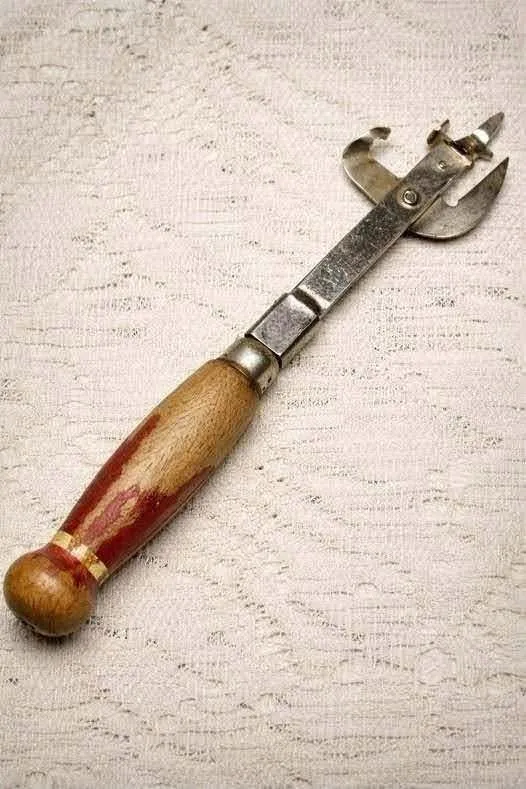
🔍 How to Identify an Old Apple Peeler
If you discover an unfamiliar antique kitchen tool, there are several details worth checking.
Look for:
a hand crank;
pointed prongs for holding fruit;
a small adjustable blade;
a clamp designed for a countertop;
gears or a rotating mechanism;
a long metal frame.
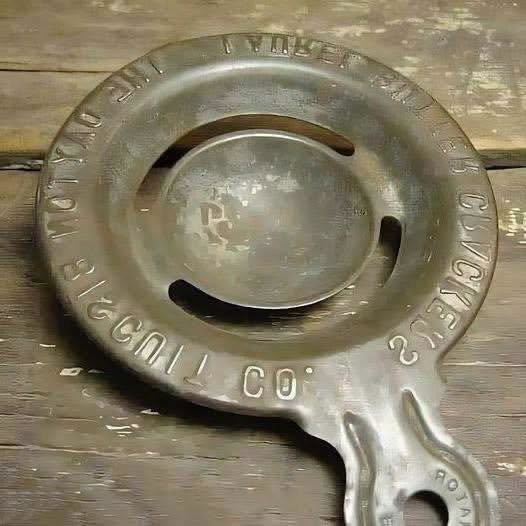
You can also check the underside or side of the tool for a manufacturer’s name, patent number, model number or country of manufacture.
Those markings can sometimes help determine the approximate age and original purpose of the item.
🧼 Can You Still Use One Today?
Some vintage apple peelers can still be functional, but an old tool should be inspected carefully before use.
Check for:
rust;
loose components;
damaged blades;
cracked metal;
unstable clamps;
difficult-to-clean areas.
If the tool is heavily corroded or has questionable materials, it may be better treated as a collectible or decorative object rather than used for food preparation.
For antique kitchen equipment, cleanliness and food safety should always come first.
🍎 Vintage Tool, Modern Kitchen
It’s interesting to compare this old-fashioned gadget with today’s electric appliances.
Modern kitchen machines can peel, slice and process fruit extremely quickly. They are convenient and often easier for people who prepare food in large quantities.
But the vintage apple peeler offers something different.
It shows exactly how the task is being accomplished.
Turn the handle.
The apple rotates.
The blade moves.
The peel comes away.
There is something satisfying about seeing the entire process happen through a simple mechanical system.
🌳 A Tool Connected to Harvest Season
The apple peeler also represents something larger: the tradition of preserving seasonal food.
When apples were plentiful, families could prepare large quantities for later use. Apples could be turned into sauces, pies, fillings, dried fruit and preserves.
A tool that reduced preparation time could therefore become a valuable part of the household kitchen.
What looks like an unusual piece of antique metal today may once have been a frequently used kitchen essential.
❤️ Why These Old Tools Still Matter
Technology changes quickly, but good design doesn’t necessarily become meaningless with age.
A well-designed tool solves a problem clearly.
The vintage hand-crank apple peeler is a wonderful example of that principle.
It didn’t need electricity.
It didn’t require complicated instructions.
It simply used mechanical movement to make a repetitive kitchen task easier.
And perhaps that’s why these old tools remain fascinating today.
They remind us that innovation doesn’t always mean adding more technology.
Sometimes, the smartest solution is simply a well-designed mechanical tool.
📝 Final Thoughts
The next time you see a strange metal device in an old kitchen, don’t assume it’s useless just because you don’t immediately recognize it.
Many household tools from previous generations were designed around everyday problems that are easy to forget today.
The vintage hand-crank apple peeler is one of those inventions.
Simple, sturdy and surprisingly clever, it helped generations of cooks prepare apples more efficiently—and today it gives us an interesting glimpse into the practical ingenuity of kitchens from another era.
💬 Have You Ever Seen One of These?
Did your parents or grandparents ever use an old-fashioned apple peeler?
Or have you discovered a strange vintage kitchen tool that you couldn’t identify?
To provide the best experiences, we use technologies like cookies to store and/or access device information. Consenting to these technologies will allow us to process data such as browsing behavior or unique IDs on this site. Not consenting or withdrawing consent, may adversely affect certain features and functions.
Functional
Always active
The technical storage or access is strictly necessary for the legitimate purpose of enabling the use of a specific service explicitly requested by the subscriber or user, or for the sole purpose of carrying out the transmission of a communication over an electronic communications network.
Preferences
The technical storage or access is necessary for the legitimate purpose of storing preferences that are not requested by the subscriber or user.
Statistics
The technical storage or access that is used exclusively for statistical purposes.The technical storage or access that is used exclusively for anonymous statistical purposes. Without a subpoena, voluntary compliance on the part of your Internet Service Provider, or additional records from a third party, information stored or retrieved for this purpose alone cannot usually be used to identify you.
Marketing
The technical storage or access is required to create user profiles to send advertising, or to track the user on a website or across several websites for similar marketing purposes.