
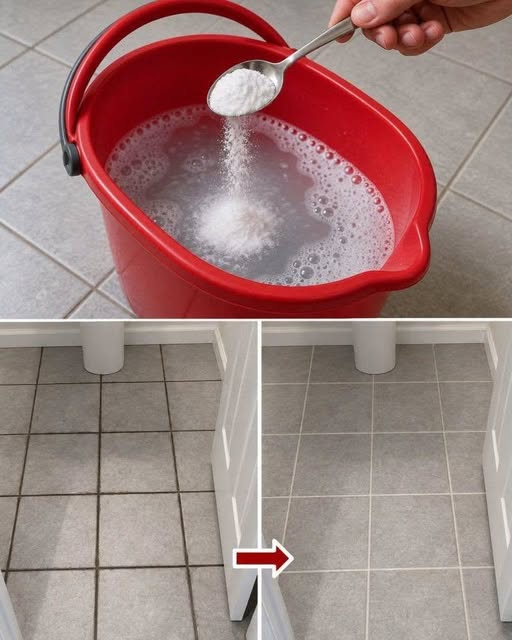
Black stains between floor tiles can make an otherwise clean room look dirty. These dark marks often develop in bathrooms, kitchens, and other areas where moisture, soap residue, and everyday dirt accumulate.
The good news is that many grout stains can be improved with the right cleaning method. However, black discoloration can have different causes, including embedded dirt, mildew, mold, or deteriorating grout. Identifying the likely cause helps you choose a suitable treatment without damaging your floors.
Here are practical ways to clean tile grout and keep it looking fresher.
1. Start With Baking Soda and Water
Baking soda can help loosen surface grime through gentle abrasion. It is a useful first step for ordinary dirt, although it may not remove deep stains or mold completely.
What you’ll need:
- Baking soda
- Water
- A small bowl
- A soft nylon grout brush or an old toothbrush
- A clean cloth
Instructions:
- Mix baking soda with a small amount of water to create a thick paste.
- Apply the paste to the stained grout lines.
- Leave it for approximately 5–10 minutes.
- Gently scrub with a soft nylon brush.
- Wipe away the loosened dirt with a damp cloth.
- Rinse the area with clean water and dry it.
Test the paste on a small, inconspicuous area first, especially if your tiles are natural stone or have a delicate finish.
2. Use a Suitable Tile and Grout Cleaner
If baking soda does not remove the stains, try a commercial cleaner specifically labeled as safe for your tile and grout type.
Instructions:
- Read the product label and follow its recommended application time.
- Test the cleaner in a hidden area.
- Apply it to the grout as directed.
- Gently scrub with a suitable brush.
- Rinse thoroughly if the instructions require rinsing.
- Dry the floor to prevent moisture from remaining in the grout.
For suspected mold or mildew, choose a product labeled for that purpose and suitable for the surface. Porous cement-based grout and natural stone may require different products from ceramic or porcelain tile.
Safety warning: Never mix cleaning products. In particular, do not combine bleach with vinegar, ammonia, acids, or other cleaners, because dangerous gases may be released. Keep the area ventilated and follow the product’s safety instructions.
3. Dry the Floor and Prevent the Stains From Returning
Removing the visible stains is only part of the solution. If moisture continues to collect between the tiles, dark discoloration may return.
Try these simple habits:
- Use an exhaust fan or open a window when appropriate to reduce bathroom humidity.
- Wipe up standing water after showers or spills.
- Clean the floor regularly with a product suitable for the tiles.
- Repair leaking pipes, damaged seals, or other sources of persistent moisture.
- Consider a compatible grout sealer if your grout is suitable for sealing and the manufacturer recommends it.
Sealer can help reduce future staining, but it does not repair damaged grout or solve an underlying moisture problem.
Why Does Tile Grout Turn Black?
Several causes can produce black or dark grout lines.
Accumulated dirt: Foot traffic, dust, and grease can become trapped in porous grout.
Mildew or mold: Persistent moisture can encourage fungal growth, particularly in poorly ventilated bathrooms.
Soap and product residue: Soap, shampoos, and cleaning products can build up over time.
Damaged grout: Cracked, crumbling, or persistently discolored grout may need professional repair or replacement rather than repeated cleaning.
If the black areas keep returning, the grout feels soft or crumbly, or you notice a persistent musty odor, investigate the source of the moisture instead of simply covering up the discoloration.
Should You Use Vinegar or Bleach on Grout?
Vinegar is acidic and may damage cement-based grout, certain tile finishes, and natural stone such as marble or limestone. It is therefore not the best universal grout cleaner.
Bleach may lighten some stains on compatible surfaces, but it is not suitable for every tile or grout type and may not address the source of recurring moisture. Never mix bleach with vinegar or any other cleaning product.
When in doubt, use a manufacturer-approved cleaner and test it before treating the entire floor.
Frequently Asked Questions
Can black grout stains be removed completely?
Many surface stains can be reduced or removed, but success depends on the cause, the grout’s condition, and how deeply the discoloration has penetrated. Damaged grout may require repair or replacement.
Does baking soda kill mold?
Baking soda can help clean away some surface grime, but it should not be relied upon as a complete mold-removal treatment. Persistent mold may require a suitable labeled product or professional assessment.
How often should grout be cleaned?
Light cleaning as part of your normal floor-cleaning routine can help prevent buildup. Bathrooms and other damp areas may need more frequent attention, depending on their use and ventilation.
When should grout be replaced?
Consider professional repair if grout is cracked, crumbling, missing, or repeatedly stained despite appropriate cleaning. Persistent dampness should be investigated before new grout is installed.
Final Thoughts
Black stains between tiles can often be improved with gentle scrubbing, a suitable cleaner, and better moisture control. Start with baking soda and water for ordinary surface dirt, then move to a compatible tile and grout cleaner if needed.
The most important step is to identify why the stains appeared in the first place. Keeping the area clean and dry, fixing leaks, and maintaining the grout can help your floor stay fresher for longer.
Always follow the tile and grout manufacturer’s care instructions, and never mix household cleaning chemicals.