8 Plants That May Help Keep Unwanted Pests Away From Your Home
A home filled with fresh herbs and fragrant plants can be beautiful—and some plants contain natural aromatic compounds that may make certain insects less interested in an area.
But there is an important distinction: no houseplant can guarantee that you will “never see mice, spiders or insects again.” Research suggests that some plant oils have repellent activity against certain insects, but the effect is often limited and short-lived. (Penn State Extension)
Here are eight plants worth considering for a fragrant home and garden.
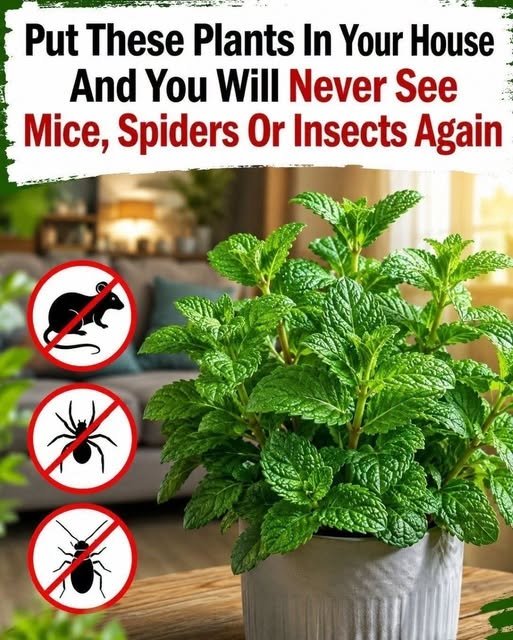
🌿 1. Peppermint
Peppermint has a strong aroma and its essential oil has demonstrated repellent activity against some insects.
A small pot of peppermint can also provide fresh leaves for tea and cooking.
Keep in mind that simply having a peppermint plant indoors is not the same as using concentrated peppermint oil as an insect repellent. The strength and duration of the effect can be very different. (Penn State Extension)
🌱 2. Basil
Basil is an easy herb to grow in a sunny location and is useful in the kitchen.
Research on companion planting suggests that herbs can sometimes interfere with the chemical cues insects use to locate plants. Basil, for example, has been studied as a companion plant with tomatoes. (Penn State Extension)
So basil can be a useful addition to a garden—but don’t expect it to create a completely insect-free home.
💜 3. Lavender
Lavender is well known for its strong fragrance, and lavender essential oil has shown repellent activity against some insects.
It also makes an attractive indoor or outdoor plant when grown under suitable conditions.
However, plant-derived repellents generally don’t provide the same broad or long-lasting protection as proven commercial repellents. (Penn State Extension)
🌿 4. Rosemary
Rosemary is another strongly aromatic herb whose essential oil has demonstrated activity against certain insects.
It thrives in sunny conditions and can be grown in containers, making it practical for patios, balconies and gardens.
Lemongrass is often associated with insect-repellent products because of its aromatic compounds.
However, simply growing a lemongrass plant is not equivalent to applying a tested repellent. The concentration of active compounds and how they’re used matter.
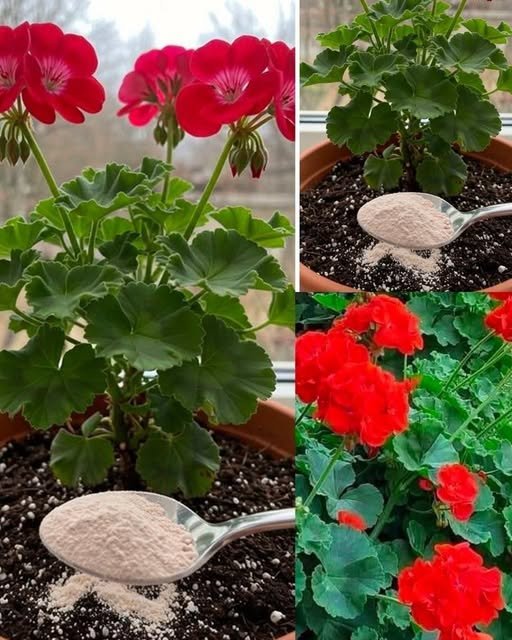
🌸 6. Geranium
Some geranium-related plant oils have demonstrated insect-repellent activity.
Geraniums are also popular ornamental plants, so they can add color while contributing a pleasant fragrance to a balcony or garden. (Penn State Extension)
🌿 7. Thyme
Thyme is another aromatic herb whose essential oil has shown repellent activity against certain insects.
It is particularly useful in a garden because it requires relatively little space and can be grown in containers.
🌿 8. Citronella
Citronella is probably one of the most recognizable plant-associated scents when it comes to mosquitoes.
However, it’s important not to confuse citronella-scented products with simply placing a plant somewhere in your house. The evidence for plant-derived repellents is much stronger for certain extracted oils or formulated products than for the presence of a plant alone. (Penn State Extension)
🐭 What About Mice?
This is where viral posts often exaggerate.
There isn’t good evidence that putting a few aromatic plants around your house will guarantee that mice stay away.
For mice, exclusion is much more reliable. Seal holes and cracks, remove accessible food, and eliminate places where rodents can nest. Penn State Extension specifically recommends sealing openings with rodent-resistant materials as an important prevention strategy. (Penn State Extension)
A beautiful mint plant may smell wonderful, but it shouldn’t replace proper mouse-proofing.
🕷️ And What About Spiders?
Spiders are also not automatically a sign of an infestation. Many species are harmless and actually help by eating other insects. (Penn State Extension)
If you want fewer spiders indoors, reducing the insects they feed on and sealing openings around doors and windows can be more effective than relying on plants alone.
🏡 The Best Strategy for a Pest-Free Home
Plants can be a pleasant supporting measure, but they shouldn’t be your only defense.
For better pest prevention:
✔️ Seal cracks and openings
Check around windows, doors, pipes and other entry points.
✔️ Keep food sealed
Don’t leave crumbs, pet food or food waste easily accessible.
Different pests require different solutions. Integrated pest management begins with identifying what you’re dealing with and addressing the conditions that allow it to thrive. (Penn State Extension)
🌿 The Bottom Line
Peppermint, basil, lavender, rosemary, lemongrass, geranium, thyme and citronella can all be useful fragrant plants, and some of their essential oils have demonstrated repellent effects against certain insects.
But the claim that these plants will make you “never see mice, spiders or insects again” is an exaggeration.
The most effective approach combines attractive plants with good sanitation, sealed entry points and pest-specific prevention.
Use the plants for their beauty and fragrance—and let good pest-management practices do the heavy lifting. 🌿🏡
To provide the best experiences, we use technologies like cookies to store and/or access device information. Consenting to these technologies will allow us to process data such as browsing behavior or unique IDs on this site. Not consenting or withdrawing consent, may adversely affect certain features and functions.
Functional
Always active
The technical storage or access is strictly necessary for the legitimate purpose of enabling the use of a specific service explicitly requested by the subscriber or user, or for the sole purpose of carrying out the transmission of a communication over an electronic communications network.
Preferences
The technical storage or access is necessary for the legitimate purpose of storing preferences that are not requested by the subscriber or user.
Statistics
The technical storage or access that is used exclusively for statistical purposes.The technical storage or access that is used exclusively for anonymous statistical purposes. Without a subpoena, voluntary compliance on the part of your Internet Service Provider, or additional records from a third party, information stored or retrieved for this purpose alone cannot usually be used to identify you.
Marketing
The technical storage or access is required to create user profiles to send advertising, or to track the user on a website or across several websites for similar marketing purposes.