What Is This Strange Metal Tool With Five Tiny Holes?
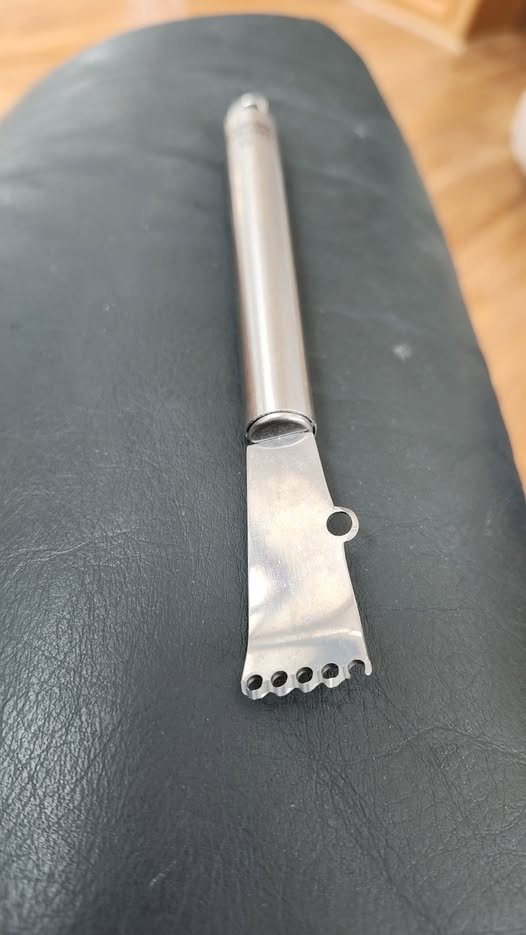
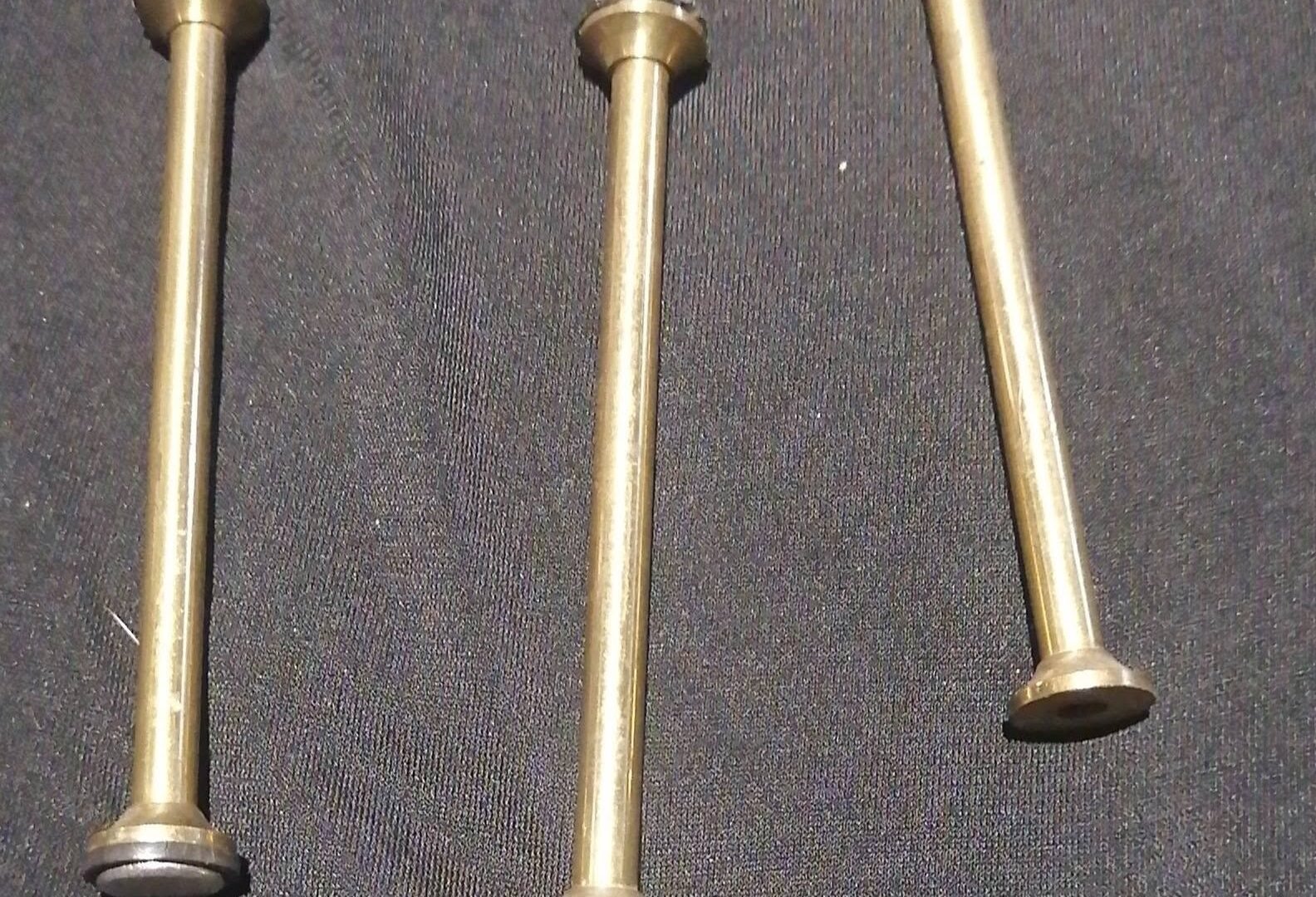
At first glance, this little stainless-steel tool looks like something from a workshop rather than a kitchen.
It has a long cylindrical handle, a flat metal head, several tiny openings along the edge, and a small hole near the top. If you found it in an old kitchen drawer, you might easily wonder what on earth it was designed to do.
But those five tiny openings are the biggest clue.
This is a citrus zester. 🍋
More specifically, it is designed to remove thin strips of zest from lemons, limes, oranges, and other citrus fruits.
🍋 What Is a Citrus Zester?
A citrus zester is a small kitchen utensil used to remove the outer colored layer of citrus peel, known as the zest.
The zest contains aromatic oils that provide a strong citrus flavor and fragrance.
Instead of removing the entire peel, a zester allows you to collect just the thin outer layer.
Professional kitchen-tool catalogs describe citrus zesters with multiple small holes specifically designed to remove strips of citrus rind. (Manuals+)
🔎 Why Does It Have Five Holes?
This is the feature that makes the tool look so mysterious.
The small openings along the working edge aren’t ordinary holes.
They have sharp cutting edges around them.
When you pull the tool across the surface of a lemon or orange, the cutting edges shave off narrow strands of the colored outer peel.
The result is thin strips of zest.
The five openings allow several strands to be produced with each stroke, making the process faster than using a knife.
🍊 How Does It Work?
Using one is surprisingly simple.
Step 1: Wash the fruit
Start with a clean lemon, lime, orange, or other citrus fruit.
Step 2: Hold the fruit firmly
Keep the fruit in one hand and the zester in the other.
Step 3: Pull the zester across the surface
Move the tool over the colored outer skin using light pressure.
You should see thin strips of zest collecting in the openings.
Step 4: Rotate the fruit
Continue around the fruit until you have enough zest.
The important thing is to avoid going too deeply into the peel.
⚠️ Don’t Go Into the White Part
There’s an important reason citrus recipes usually call for zest rather than simply grated peel.
Under the colorful outer skin is a white layer called the pith.
The pith tends to be much more bitter.
A citrus zester is designed to remove the aromatic outer layer while minimizing the amount of bitter white pith that comes with it.
That’s one of the advantages of using a dedicated tool instead of simply cutting the peel with a knife.
🍰 What Can You Use Citrus Zest For?
This tiny tool can make a surprisingly big difference in cooking and baking.
Fresh citrus zest can be added to:
Cakes
Cookies
Cheesecakes
Muffins
Pies
Frostings
Sauces
Marinades
Salad dressings
Pasta dishes
Fish recipes
Cocktails
Tea
Desserts
A little lemon zest can add a bright aroma without adding much liquid.
That’s particularly useful in baking, where adding too much lemon juice could change the consistency of a recipe.
🍋 Lemon Zest vs. Lemon Juice
Many people automatically reach for lemon juice when they want a stronger citrus flavor.
But zest and juice behave very differently.
Lemon juice provides acidity and liquid.
Lemon zest provides concentrated citrus aroma and flavor from the oils in the outer peel.
That’s why recipes sometimes use both.
For example, a lemon cake might contain lemon juice for acidity while using zest to create a much stronger lemon fragrance.
🧰 Why Is the Handle So Long?
The long handle makes the tool easier to control.
Instead of placing your fingers directly next to the sharp cutting openings, you hold the handle farther away.
It also provides leverage while you pull the tool across the fruit.
The cylindrical handle in the photograph is typical of the type of construction used for small kitchen utensils.
🕳️ What’s the Little Hole For?
The small hole near the top of the metal head is most likely a hanging hole.
Many kitchen utensils include a small opening so they can be hung from a hook or utensil rack.
That was particularly useful in kitchens where tools were kept within easy reach rather than stored inside drawers.
👩🍳 Why Did Older Kitchens Use Tools Like This?
Before modern food processors and multifunction kitchen gadgets became common, cooks often had individual tools for very specific tasks.
A citrus zester is a perfect example.
Today, someone might use a microplane or fine grater for zest.
But traditional citrus zesters were specifically designed to produce long, narrow strips of peel.
Some professional kitchen catalogs still distinguish between citrus zesters, lemon strippers, and other citrus-peeling tools because each produces a different type of peel. (Manuals+)
🔪 It’s Different From a Microplane
A microplane produces very fine, fluffy pieces of zest.
The tool in this photograph works differently.
Its individual cutting openings create narrow strands or strips.
That makes it particularly useful when you want visible pieces of citrus zest rather than a finely grated powder.
🍊 You Can Use It With Several Citrus Fruits
Despite often being called a “lemon zester,” the tool isn’t limited to lemons.
It can be used with:
Lemons — bright and sharp citrus flavor
Limes — especially useful in desserts, drinks, and Mexican-inspired dishes
Oranges — sweeter and more fragrant
Grapefruit — stronger and slightly bitter citrus aroma
The basic technique is the same: remove only the thin outer colored layer.
🧼 How Should You Clean It?
Because tiny pieces of peel can become trapped in the openings, it’s important to clean a citrus zester soon after using it.
Rinse it under warm water and use a small brush if necessary.
Be careful when cleaning around the cutting openings—they can be surprisingly sharp.
If the tool is dishwasher-safe according to its manufacturer, it can generally be cleaned that way, but older or vintage examples may be better treated more carefully.
🤔 Why Does It Look So Mysterious?
The design is a perfect example of how specialized kitchen tools can look completely unfamiliar when removed from their original context.
Without knowing what the five openings do, the object could easily be mistaken for:
A small woodworking tool
A metal scraper
A repair tool
A miniature grater
A workshop instrument
But once you know that the openings have cutting edges, everything suddenly makes sense.
🕰️ A Simple Tool With a Clever Design
There’s nothing complicated about the technology.
It doesn’t need electricity.
There are no gears, batteries, or moving parts.
It’s simply a carefully shaped piece of metal designed to perform one job extremely well.
And that’s part of what makes old kitchen tools so interesting.
Many of them were designed around a single culinary task, and their shapes were refined over time to make that task easier.
Final Thoughts
That mysterious metal object is a citrus zester, designed to remove thin strips of zest from lemons, limes, oranges, and other citrus fruits.
The five small openings along the edge are the key. Their cutting edges remove narrow strands of the fruit’s colorful outer peel while helping avoid the bitter white pith underneath. Professional kitchen-tool catalogs specifically describe five-hole citrus zesters as tools for removing strips of citrus rind. (Manuals+)
So if you ever find one hiding in an old kitchen drawer, don’t throw it away.
It might be one of those simple little tools that can turn an ordinary lemon cake, dessert, sauce, or drink into something much more aromatic.
🍋 Did You Know What It Was?
Would you have guessed “citrus zester” just by looking at the picture?
Or did you think those five little holes were meant for something completely different?
To provide the best experiences, we use technologies like cookies to store and/or access device information. Consenting to these technologies will allow us to process data such as browsing behavior or unique IDs on this site. Not consenting or withdrawing consent, may adversely affect certain features and functions.
Functional
Always active
The technical storage or access is strictly necessary for the legitimate purpose of enabling the use of a specific service explicitly requested by the subscriber or user, or for the sole purpose of carrying out the transmission of a communication over an electronic communications network.
Preferences
The technical storage or access is necessary for the legitimate purpose of storing preferences that are not requested by the subscriber or user.
Statistics
The technical storage or access that is used exclusively for statistical purposes.The technical storage or access that is used exclusively for anonymous statistical purposes. Without a subpoena, voluntary compliance on the part of your Internet Service Provider, or additional records from a third party, information stored or retrieved for this purpose alone cannot usually be used to identify you.
Marketing
The technical storage or access is required to create user profiles to send advertising, or to track the user on a website or across several websites for similar marketing purposes.