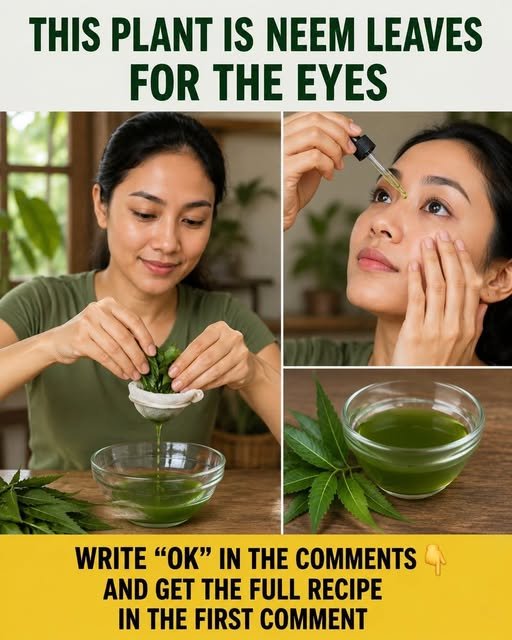
Neem (Azadirachta indica) has a long history of traditional use in different cultures, and neem leaves are often discussed online for their potential health benefits. However, viral posts showing homemade neem juice being placed directly into the eyes should be treated with caution.
The eye is extremely sensitive, and substances that have not been specifically prepared and tested as sterile ophthalmic products can cause irritation, infection, or injury. (Poison Control)
Can Neem Juice Be Used as Eye Drops?
It is not recommended to put homemade neem juice or leaf extract directly into the eyes.
A homemade preparation does not have the sterility and quality controls required for ophthalmic products. Even natural ingredients can contain microorganisms or compounds that irritate the delicate surface of the eye. Products intended for the eye need to meet specific safety and sterility standards. (Poison Control)
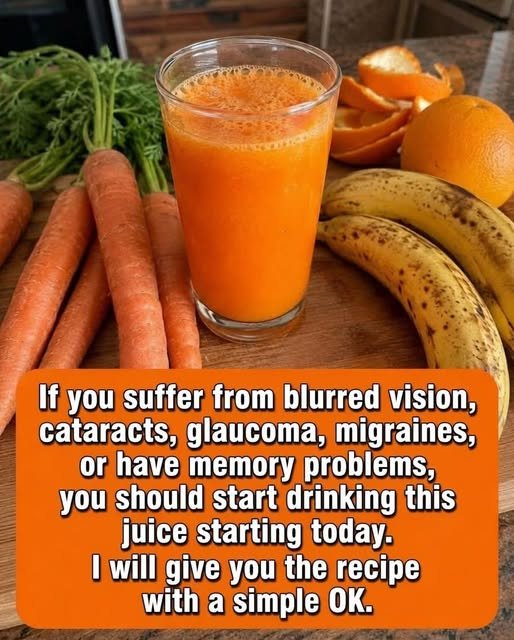
So, despite the claim in the image, neem juice should not be presented as a proven treatment for vision problems, cataracts, glaucoma, infections, or other eye diseases.
Why Is Eye Safety So Important?
The cornea and other structures of the eye are particularly sensitive.
Putting an inappropriate substance into the eye can potentially cause:
Burning or stinging
Redness
Excessive tearing
Irritation
Blurred vision
Infection
Damage to the surface of the eye
Poison Control specifically advises that substances not intended for ocular use can cause irritation or even significant eye injury. (Poison Control)
What About Natural Remedies?
“Natural” does not automatically mean “safe for the eyes.”
There are many online trends involving honey, plant extracts, herbal juices, and homemade eye drops. Even when a substance has traditional uses, that does not establish that putting it directly into the eye is safe or effective.
For example, Poison Control has warned about homemade honey eye-drop trends because preparations may not be sterile and can introduce bacteria or fungi into the eye. (Poison Control)
What Should You Use for Your Eyes?
If you have dry, irritated, or uncomfortable eyes, use an eye product specifically designed for ocular use and follow its label or your eye-care professional’s instructions.
If you have a diagnosed eye condition such as glaucoma, do not replace prescribed eye drops with herbal preparations. Ophthalmic medications are specifically formulated for use in the eye and are an important part of treatment for many eye diseases. (Academy Store)
What If Neem Juice Gets Into Your Eye?
If you accidentally put neem juice or another homemade preparation into your eye, rinse the eye thoroughly with clean running water.
Poison Control recommends flushing an eye exposure with plenty of water for 15–20 minutes. If pain, redness, blurred vision, or other symptoms continue, seek medical evaluation. (Poison Control)
A Better Way to Think About Neem
Neem leaves can be discussed as a traditional plant ingredient, but that is very different from claiming that neem juice is a safe or proven eye treatment.
There is an important distinction between:
Traditional use 🌿 and Clinically proven eye treatment 👁️
For eye diseases or persistent vision changes, an ophthalmologist or other qualified eye-care professional should determine the appropriate treatment.
Final Thoughts
The viral claim that “neem leaves are for the eyes” should not be interpreted as an instruction to make neem juice and put it into your eyes.
Your eyes deserve products that are specifically formulated and tested for ocular use. Never experiment with homemade plant extracts or juices as eye drops.
If you are experiencing blurred vision, eye pain, redness, flashes, sudden floaters, or sudden vision loss, seek professional eye care rather than relying on a home remedy.
Important: This article is for educational purposes only and does not replace professional medical or ophthalmological advice.
To provide the best experiences, we use technologies like cookies to store and/or access device information. Consenting to these technologies will allow us to process data such as browsing behavior or unique IDs on this site. Not consenting or withdrawing consent, may adversely affect certain features and functions.
Functional
Always active
The technical storage or access is strictly necessary for the legitimate purpose of enabling the use of a specific service explicitly requested by the subscriber or user, or for the sole purpose of carrying out the transmission of a communication over an electronic communications network.
Preferences
The technical storage or access is necessary for the legitimate purpose of storing preferences that are not requested by the subscriber or user.
Statistics
The technical storage or access that is used exclusively for statistical purposes.The technical storage or access that is used exclusively for anonymous statistical purposes. Without a subpoena, voluntary compliance on the part of your Internet Service Provider, or additional records from a third party, information stored or retrieved for this purpose alone cannot usually be used to identify you.
Marketing
The technical storage or access is required to create user profiles to send advertising, or to track the user on a website or across several websites for similar marketing purposes.