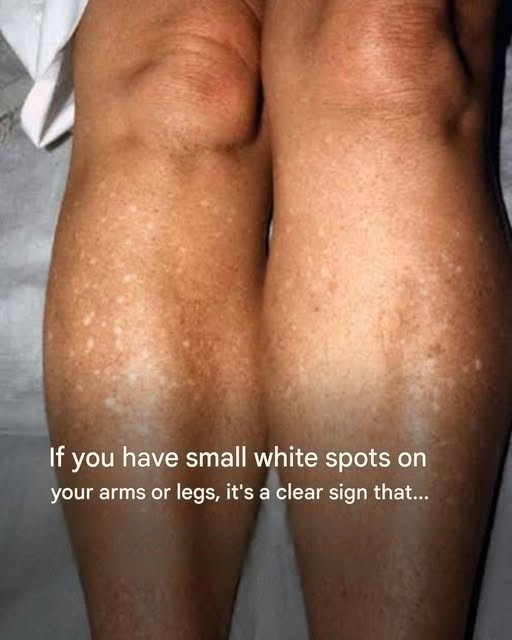
Have you noticed tiny white spots appearing on your arms, legs, or other areas of your skin? These spots are common, particularly as people get older or spend years in the sun. Although they may look concerning, many causes are harmless.
However, not all white spots are the same. Some develop because of sun exposure, while others may be related to skin conditions such as vitiligo or fungal infections.
The appearance of white spots alone cannot identify the cause. Understanding their pattern and associated symptoms can help you decide whether you need a medical evaluation.
1. Idiopathic Guttate Hypomelanosis: Small White Spots Associated With Aging
One common explanation for tiny, flat white spots on the arms and lower legs is a condition called idiopathic guttate hypomelanosis.
These spots are usually small, smooth, and lighter than the surrounding skin. They commonly appear on areas exposed to sunlight, such as the forearms and shins, and become more frequent with age.
The spots are generally harmless and are thought to be associated with a combination of aging and cumulative sun exposure.
They usually do not itch or hurt and are not contagious.
What can help?
- Use broad-spectrum sunscreen on exposed skin.
- Wear protective clothing when spending time outdoors.
- Ask a dermatologist about cosmetic treatment options if the spots bother you.
These measures can protect the skin, but existing spots may not disappear completely.
2. Vitiligo: Loss of Skin Pigment
Vitiligo is a condition in which the immune system damages the cells responsible for producing skin pigment.
It can cause clearly defined white patches that may gradually enlarge or appear in new areas. The patches can develop on the hands, face, arms, legs, and other parts of the body.
Unlike many small sun-related spots, vitiligo patches may be larger and more sharply outlined. Hair growing within affected areas can sometimes turn white.
Vitiligo is not contagious and does not result from poor hygiene.
If you notice new, expanding, or sharply defined white patches, a healthcare professional or dermatologist can assess your skin and discuss appropriate treatment options.
3. Tinea Versicolor: A Fungal Skin Condition
Tinea versicolor is a common skin condition caused by an overgrowth of a yeast that naturally lives on the skin.
It can produce lighter or darker patches, often on the chest, back, shoulders, and upper arms. The affected skin may have fine scaling, and mild itching can sometimes occur.
The patches may become more noticeable after sun exposure because the surrounding skin tans while the affected areas do not.
Tinea versicolor is usually treatable with antifungal products recommended by a healthcare professional. Skin color may take weeks or months to return to normal after the infection has been treated.
Because other skin conditions can look similar, it is best to confirm the diagnosis before using treatment.
4. Post-Inflammatory Hypopigmentation
Sometimes, skin becomes lighter after an injury, rash, eczema flare, burn, or other inflammation.
This is known as post-inflammatory hypopigmentation. The skin produces less pigment in the affected area, creating a lighter patch after the original problem improves.
The change may gradually fade over time, although recovery depends on the cause and severity.
If the skin remains pale, develops new patches, or becomes irritated again, seek medical advice to determine whether further treatment is needed.
5. Dry Skin and Other Skin Conditions
Dryness and certain inflammatory skin conditions can make areas of the skin appear lighter or uneven in color.
For example, some people develop pale, slightly scaly patches associated with eczema or related conditions. These are not necessarily the same as the small, smooth spots commonly seen on sun-exposed arms and legs.
Using a gentle cleanser and a fragrance-free moisturizer may help when dryness is contributing to the appearance.
Persistent, itchy, scaly, or spreading patches should be assessed by a healthcare professional rather than treated with random creams.
6. Could White Spots Mean You Have a Vitamin Deficiency?
White spots are often attributed to vitamin deficiencies on social media, but their appearance alone does not prove that you lack vitamin D, vitamin B12, calcium, or another nutrient.
Nutritional deficiencies can affect health and sometimes the skin, but the causes of localized white spots are varied. A clinician may recommend blood tests if your medical history, diet, or other symptoms suggest a deficiency.
Avoid taking high-dose vitamins solely to treat white spots without knowing the cause.
When Should You See a Dermatologist?
Arrange a medical appointment if white spots:
- Appear suddenly or spread quickly.
- Develop clearly defined borders or become larger.
- Are accompanied by itching, scaling, pain, or inflammation.
- Occur alongside other unexplained skin changes.
- Do not improve or you are unsure what is causing them.
A dermatologist may be able to identify the condition by examining the skin. In some cases, a special light examination, skin scraping, or other testing may be helpful.
How Can You Protect Your Skin?
Although not every cause of white spots can be prevented, good skin care can help protect the skin and reduce irritation.
Use Sunscreen
Choose a broad-spectrum sunscreen with SPF 30 or higher on exposed skin, and reapply according to the product instructions when outdoors. Sun protection helps prevent sunburn and reduces further UV damage.
Moisturize Regularly
A fragrance-free moisturizer can help maintain the skin barrier, especially if your skin is dry or sensitive.
Avoid Unnecessary Skin Treatments
Do not use strong bleaching products, steroid creams, or antifungal medications without an appropriate reason. The wrong treatment may irritate the skin or delay diagnosis.
Monitor Changes
Take a photograph of the affected area in consistent lighting if you want to track changes over time. This may also help your healthcare professional understand how the spots have developed.
Frequently Asked Questions
Are small white spots on the legs dangerous?
Many are harmless, particularly small, flat spots associated with aging and sun exposure. However, some white patches are caused by treatable skin conditions, so new or changing spots should be assessed when appropriate.
Do white spots mean I have low vitamin D?
No. White spots do not reliably indicate low vitamin D. A blood test may be needed to determine vitamin D status if there is a medical reason to check it.
Can white spots disappear naturally?
It depends on the cause. Some patches gradually fade, while others may remain. Treatments for conditions such as fungal infections can resolve the underlying problem, although skin color may take time to return to normal.
Are white spots contagious?
Conditions such as idiopathic guttate hypomelanosis and vitiligo are not contagious. Tinea versicolor is also not generally considered contagious because it involves an overgrowth of yeast normally present on the skin.
Can sunlight make white spots more noticeable?
Yes. Surrounding skin may tan while areas with reduced pigment remain lighter, making the contrast more obvious. Sun protection can help prevent additional sun-related skin damage.
Final Thoughts
Small white spots on your arms or legs can result from several conditions, including age-related pigment changes, vitiligo, fungal infections, and changes following skin inflammation.
They do not automatically mean that you have a vitamin deficiency or a serious illness. The most useful clues are the size, shape, location, texture, and progression of the spots.
If the patches are new, spreading, itchy, or changing, a dermatologist can help identify the cause and recommend suitable treatment. In the meantime, protect your skin from excessive sun exposure and avoid unproven remedies.
Medical disclaimer: This article is for educational purposes only and does not replace professional medical advice, diagnosis, or treatment.
Trusted Sources
- American Academy of Dermatology — Vitiligo: https://www.aad.org/public/diseases/a-z/vitiligo-overview
- DermNet — Idiopathic guttate hypomelanosis: https://dermnetnz.org/topics/idiopathic-guttate-hypomelanosis
- DermNet — Tinea versicolor: https://dermnetnz.org/topics/pityriasis-versicolor