What Should You Add to Your Water for Better Circulation? The Truth Behind the Viral Claim
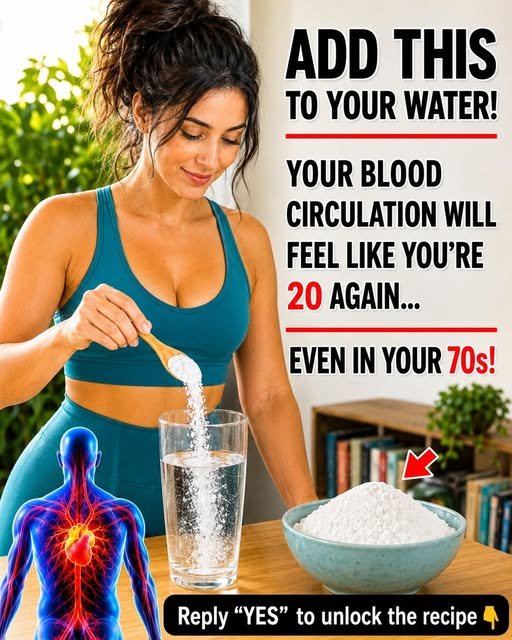
A viral image claims that adding a white powder to water can make your blood circulation feel “like you’re 20 again,” even in your 70s. While the message may sound convincing, there is no single powder that can safely or reliably produce this effect.
The good news is that something much simpler really does matter for circulation: staying adequately hydrated.
Water is essential for blood and other body fluids, and dehydration can affect how the body functions. Research also suggests that maintaining good hydration is associated with healthier aging, although this does not mean that drinking a particular mixture can reverse aging or restore circulation. (Actualités en santé)
Why Hydration Matters for Circulation
Your blood is largely made up of water and other components. When you become dehydrated, your body loses fluid, which can affect blood volume and contribute to symptoms such as dizziness, weakness, headache, and a rapid heartbeat.
For people with low blood pressure, drinking enough fluids can help increase blood volume and may improve symptoms related to dehydration. (Mayo Clinic)
However, hydration should not be confused with a treatment for poor circulation caused by an underlying medical condition.
Is There a Special Powder You Should Add to Water?
For most healthy people, plain water is an excellent choice for everyday hydration.
There is little evidence that adding a particular powder to ordinary drinking water will dramatically improve circulation or make the body function like it did decades earlier. Claims about special powders, alkaline water, or “circulation boosters” should therefore be treated cautiously. (Mayo Clinic News Network)
Some people do need fluids containing electrolytes, particularly after heavy sweating, vomiting, diarrhea, or prolonged strenuous exercise. But these products are not necessary for everyone.
How Much Water Do You Need?
There isn’t one perfect amount for everyone.
Your fluid needs depend on factors such as:
Age
Body size
Physical activity
Climate
Diet
Pregnancy or breastfeeding
Illness
Certain medications
Kidney and heart health
Current guidance emphasizes that individual needs vary. Fluids come not only from plain water but also from other beverages and water-rich foods. (Mayo Clinic)
A practical approach is to drink regularly throughout the day and increase fluids when you’re losing more water through sweating or illness.
Signs You May Not Be Drinking Enough
Possible signs of dehydration include:
Increased thirst
Dry mouth
Headache
Darker urine
Less frequent urination
Dizziness or weakness
Mild dehydration can often improve by drinking fluids. Severe dehydration, however, can become dangerous and may require medical treatment. (Actualités en santé)
What About “Better Circulation”?
If you regularly experience:
Cold hands or feet
Leg pain when walking
Persistent numbness or tingling
Swelling
Skin color changes
Unexplained weakness
Shortness of breath
don’t assume the problem is simply dehydration.
Poor circulation can have many causes, including problems involving the blood vessels, heart, nerves, medications, or other medical conditions. Persistent symptoms deserve professional evaluation.
Simple Ways to Support Healthy Circulation
Instead of relying on a viral “miracle” drink, focus on habits that support overall cardiovascular health:
Stay Hydrated
Drink enough fluids to replace what your body loses throughout the day.
Stay Active
Regular physical activity supports cardiovascular fitness and healthy blood flow.
Avoid Long Periods of Sitting
If you sit for long periods, get up regularly and move around.
Eat a Balanced Diet
A diet rich in vegetables, fruits, whole grains, legumes, and other nutrient-dense foods supports overall heart health.
Don’t Smoke
Smoking damages blood vessels and significantly increases cardiovascular risk.
Manage Blood Pressure and Cholesterol
Regular checkups can help identify cardiovascular risk factors before they become bigger problems.
Can Drinking More Water Make You Feel Younger?
Proper hydration can certainly help you feel better when you’re dehydrated. You may experience improvements in symptoms such as thirst, dry mouth, headache, and fatigue.
Research from the NIH has also found associations between better hydration and healthier aging, but these studies do not prove that a special drink can reverse aging or restore circulation to that of a 20-year-old. (NIH)
That’s an important distinction when evaluating viral health claims.
Final Thoughts
The idea of adding a secret ingredient to water to make your circulation “feel like you’re 20 again” is appealing, but there is no magic powder proven to reverse aging or dramatically restore circulation.
For most people, the simplest choice is also one of the best: drink enough water and maintain healthy daily habits. If you have persistent circulation problems, don’t rely on a viral recipe—talk with a healthcare professional to find the underlying cause.
Important: This article is for general educational purposes and does not replace personalized medical advice. People with heart, kidney, or other conditions that affect fluid balance should ask their healthcare professional how much fluid is appropriate for them.
To provide the best experiences, we use technologies like cookies to store and/or access device information. Consenting to these technologies will allow us to process data such as browsing behavior or unique IDs on this site. Not consenting or withdrawing consent, may adversely affect certain features and functions.
Functional
Always active
The technical storage or access is strictly necessary for the legitimate purpose of enabling the use of a specific service explicitly requested by the subscriber or user, or for the sole purpose of carrying out the transmission of a communication over an electronic communications network.
Preferences
The technical storage or access is necessary for the legitimate purpose of storing preferences that are not requested by the subscriber or user.
Statistics
The technical storage or access that is used exclusively for statistical purposes.The technical storage or access that is used exclusively for anonymous statistical purposes. Without a subpoena, voluntary compliance on the part of your Internet Service Provider, or additional records from a third party, information stored or retrieved for this purpose alone cannot usually be used to identify you.
Marketing
The technical storage or access is required to create user profiles to send advertising, or to track the user on a website or across several websites for similar marketing purposes.