Have you ever wondered why you naturally curl up on your side, stretch out across the bed, or sleep on your stomach? Many people have a favorite sleeping position, and some popular theories suggest that these positions reveal hidden aspects of personality.
But is there scientific evidence that the way you sleep tells others whether you are shy, confident, sensitive, or outgoing?
Not really. Sleeping positions cannot reliably reveal your personality or diagnose your mental health. However, your preferred position can affect physical comfort, back and neck pain, snoring, and certain sleep-related conditions.
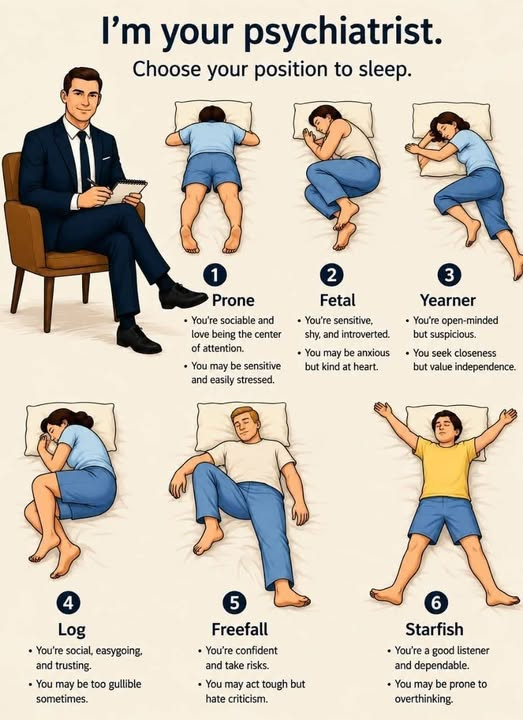
Let’s explore six common sleeping positions, the personality traits popularly associated with them, and what sleep science actually tells us.
1. The Prone Position: Sleeping on Your Stomach
People who sleep face-down, with their arms near their pillow or stretched out, are sometimes described in popular sleep-position guides as confident, outgoing, or eager to be noticed.
These descriptions are entertaining, but they are not scientifically established personality assessments.
What Does Sleeping on Your Stomach Mean for Your Health?
Sleeping on your stomach may feel comfortable for some people, and it can reduce snoring in certain cases. However, it often requires turning the head to one side for extended periods, which may strain the neck.
It can also place extra pressure on the lower back.
Helpful tip: If you prefer this position, consider a relatively thin pillow under your head and a supportive mattress. If you regularly wake with neck or back pain, try a different position to see whether your discomfort improves.
2. The Fetal Position: Curled Up on Your Side
The fetal position involves lying on one side with the knees bent toward the chest. It is one of the most recognizable sleeping postures.
Popular interpretations often associate this position with sensitivity, shyness, or a preference for comfort and security. However, there is no reliable evidence that people who sleep this way share a particular personality type.
Potential Health Benefits
Side sleeping can be comfortable for many people and may help reduce snoring. Sleeping on the side is also often recommended for people whose obstructive sleep apnea becomes worse when they sleep on their backs.
A very tight curl may feel restrictive for some people, so a more relaxed posture can be worth trying.
Helpful tip: Keep your knees comfortably bent rather than pulling them tightly toward your chest. A pillow between your knees may help support your hips and spine.
3. The Yearner Position: Sleeping on Your Side With Your Arms Extended
In this position, the sleeper lies on their side with both arms stretched forward. Popular personality descriptions sometimes label yearners as open-minded, cautious, or independent.
These are cultural interpretations rather than conclusions supported by strong scientific evidence.
What Should You Know About This Position?
Side sleeping can support a comfortable spinal position, but the way you place your arms may affect shoulder comfort. If you press one arm beneath your body or pillow, you may experience pressure or numbness.
Helpful tip: Keep your neck aligned with your spine and avoid placing your full body weight on a bent arm. If shoulder pain persists, experiment with a different pillow height or sleeping position.
4. The Log Position: Sleeping on Your Side With Your Arms by Your Body
The log position involves lying on one side with the legs relatively straight and the arms resting close to the body.
Some popular sleep-position theories associate it with sociability, trust, or an easygoing nature. These traits cannot be determined from sleeping posture alone.
Is the Log Position Healthy?
For many people, side sleeping is a comfortable option. It may help reduce snoring compared with sleeping flat on the back, particularly in people with position-dependent sleep apnea.
However, pressure on the shoulder or hip can cause discomfort in some sleepers.
Helpful tip: Choose a pillow that keeps your head level with your spine. If your shoulder or hip hurts, consider switching sides or trying a different mattress and pillow combination.
5. The Freefall Position: Sleeping on Your Stomach With Your Arms Around the Pillow
The freefall position generally involves lying on the stomach, with the head turned to one side and the arms around or beneath the pillow.
Some popular interpretations describe freefall sleepers as bold, confident, or sensitive to criticism. There is not enough scientific evidence to treat these descriptions as reliable personality findings.
What About Physical Comfort?
As with other stomach-sleeping positions, freefall may place the neck in a rotated position for long periods. Depending on your mattress and posture, this can contribute to stiffness or discomfort in the neck and back.
Helpful tip: If you wake with pain, try side sleeping with a pillow between your knees or back sleeping with a pillow under your knees, provided these positions are comfortable for you.
6. The Starfish Position: Sleeping on Your Back With Arms and Legs Spread Out
Starfish sleepers lie on their backs with their arms and legs extended away from the center of the body.
Popular personality descriptions sometimes associate this position with being a good listener, dependable, or prone to overthinking. These associations should be viewed as entertainment rather than psychological facts.
Is Sleeping on Your Back a Good Choice?
Back sleeping can help some people maintain a comfortable spinal position, particularly when the head and neck are properly supported.
However, sleeping on the back can worsen snoring and obstructive sleep apnea in some people. It may also aggravate symptoms of acid reflux for certain sleepers.
Helpful tip: A pillow under your knees may reduce pressure on your lower back. If you snore heavily or wake up gasping, speak with a healthcare professional rather than relying on a position change alone.
Can Your Sleeping Position Really Reveal Your Personality?
There is no reliable scientific method for determining personality traits from a person’s sleeping position.
Sleep posture can be influenced by many factors, including:
- Habit and personal comfort.
- Mattress and pillow support.
- Neck, shoulder, hip, or back pain.
- Pregnancy and other physical changes.
- Snoring or sleep-related breathing problems.
- Temperature and sleeping environment.
People also change positions throughout the night, so the posture in which someone falls asleep may not be the position they maintain for most of their sleep.
If you enjoy reading about sleep-position personalities, treat the descriptions as lighthearted conversation starters—not as a way to judge yourself or someone else.
Which Sleeping Position Is Best for Your Health?
There is no single best position for everyone. The most suitable position depends on your comfort, medical history, and sleep-related symptoms.
- For many people with back discomfort: Side sleeping with a pillow between the knees, or back sleeping with a pillow under the knees, may help.
- For people who snore: Side sleeping may reduce snoring in some cases.
- For people with acid reflux: Sleeping on the left side or elevating the head of the bed may help reduce nighttime symptoms.
- During pregnancy: Side sleeping is generally recommended as pregnancy progresses; follow your maternity care provider’s advice.
- For stomach sleepers with neck pain: Trying side or back sleeping may reduce strain.
If you have persistent pain, loud snoring, breathing pauses during sleep, or frequent daytime sleepiness, discuss these symptoms with a healthcare professional.
Five Habits That Can Help You Sleep Better
Whatever position you prefer, good sleep habits can make a meaningful difference.
- Keep a regular sleep schedule. Try to go to bed and wake up at consistent times.
- Choose supportive bedding. Your pillow and mattress should help you maintain a comfortable posture.
- Create a relaxing bedtime routine. Reading, quiet music, or gentle relaxation exercises may help you unwind.
- Limit caffeine late in the day. Caffeine can make it harder to fall asleep or stay asleep.
- Make your bedroom comfortable. A quiet, dark, and comfortably cool room can support better sleep.
Frequently Asked Questions
What is the healthiest sleeping position?
It depends on your needs. Side sleeping may help people who snore, while back sleeping may feel better for some people with back pain. The best choice is one that supports comfortable sleep without worsening a medical condition.
Does sleeping in the fetal position mean you are anxious?
No. A curled-up sleeping position cannot establish whether someone has anxiety or another mental health condition.
Is sleeping on your stomach bad for you?
Not necessarily, but it can put extra strain on the neck and lower back. If you regularly wake with pain, consider experimenting with another position.
Why do people change sleeping positions during the night?
Movement is a normal part of sleep. People may shift positions because of comfort, temperature, pressure on joints, or changes in sleep stages.
Can sleeping position affect snoring?
Yes. In some people, sleeping on the back can worsen snoring, while side sleeping may help. Persistent loud snoring or pauses in breathing should be medically assessed.
Final Thoughts
Your sleeping position may offer clues about what feels comfortable for your body, but it cannot reliably reveal your personality, emotional state, or psychological health.
Rather than worrying about whether you sleep like a starfish, log, or fetal sleeper, pay attention to how well you rest and how you feel when you wake up.
A comfortable position, supportive bedding, and healthy sleep habits can help you get better rest. If your position regularly causes pain or you experience signs of a sleep disorder, professional advice can help you find a solution.
Medical disclaimer: This article is for educational purposes only and does not replace professional medical advice, diagnosis, or treatment.
Trusted Sources
- Sleep Foundation — What Is the Best Sleeping Position? https://www.sleepfoundation.org/sleeping-positions
- Cleveland Clinic — What’s the Best Sleeping Position for You? https://health.clevelandclinic.org/best-sleeping-position
- Sleep Foundation — Sleep Posture: https://www.sleepfoundation.org/sleeping-positions/sleep-posture