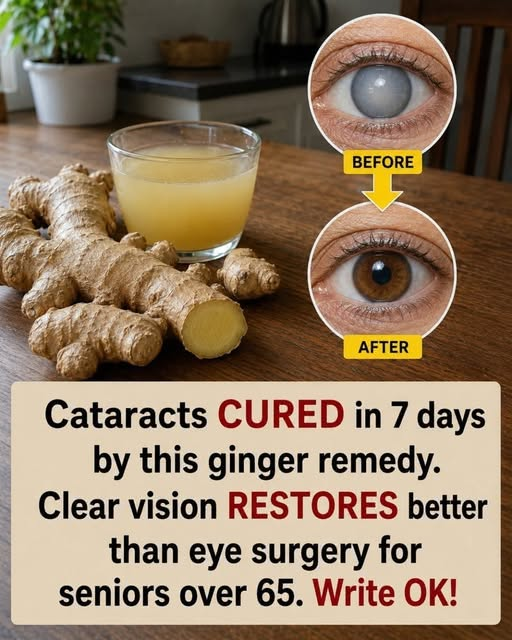
Ginger is a popular kitchen ingredient known for its distinctive flavor and use in traditional remedies. It contains natural compounds that have been studied for their antioxidant and anti-inflammatory properties. But can drinking ginger juice really cure cataracts, restore clear vision in seven days, or work better than eye surgery?
The answer is no: there is no reliable clinical evidence that ginger cures cataracts or reverses the clouding of the eye’s lens. Cataracts are a medical condition that should be assessed by an eye-care professional, especially when vision becomes blurry or begins to interfere with daily activities.
Let’s look at what cataracts are, what ginger may offer as part of a healthy diet, and which steps can genuinely help protect your eyesight.
What Are Cataracts?
A cataract develops when the normally clear lens inside the eye becomes cloudy. This makes it harder for light to pass through the lens and reach the retina, resulting in changes to vision.
Cataracts are common as people age, although they can also develop following an eye injury, certain medical conditions, or long-term use of some medications.
Common symptoms include:
- Blurry, cloudy, or hazy vision.
- Difficulty seeing clearly at night.
- Increased sensitivity to bright lights and glare.
- Halos around headlights or lamps.
- Colors appearing faded or less vivid.
- Frequent changes in glasses prescriptions.
- Difficulty reading, driving, or recognizing faces.
Cataracts usually develop gradually. However, sudden changes in vision should not automatically be attributed to cataracts and require prompt medical assessment.
Can Ginger Juice Remove Cataracts?
There is currently no good clinical evidence that ginger juice, ginger tea, or a homemade ginger remedy can remove cataracts or restore a cloudy lens to its original transparency.
A cataract involves structural changes within the eye’s lens. Drinking a beverage cannot be relied upon to reverse those changes.
Claims that cataracts disappear within seven days or that a ginger remedy is more effective than cataract surgery are not supported by established medical evidence.
Never put homemade ginger juice or other food-based remedies directly into your eyes. They are not sterile eye medicines and may cause irritation, contamination, or injury.
What Are the Potential Benefits of Ginger?
Ginger can be part of a balanced diet. It contains compounds such as gingerols, which researchers have studied for their biological effects.
However, it is important to distinguish general nutritional benefits from proven treatments for eye disease.
1. Ginger Contains Antioxidant Compounds
Ginger contains natural compounds with antioxidant activity in laboratory studies. Antioxidants help protect cells from certain types of oxidative damage.
This does not establish that drinking ginger juice prevents cataracts or reverses existing lens clouding.
2. Ginger Can Add Flavor to a Healthy Diet
Fresh ginger can be added to meals, soups, or beverages. Using it to flavor food may help people enjoy a varied, balanced eating pattern.
There is no need to drink concentrated ginger juice or take high-dose supplements to maintain eye health.
3. Ginger Is Not a Substitute for Eye Treatment
Although ginger is widely used in food and traditional remedies, it has not been established as a treatment for cataracts, glaucoma, macular degeneration, or other eye diseases.
If you have blurry vision, the most useful step is to determine the cause rather than relying on a home remedy.
What Actually Helps Treat Cataracts?
According to the National Eye Institute, surgery is the only way to remove a cataract. However, not everyone needs surgery immediately.
An eye-care professional can examine your eyes and help determine the most appropriate approach.
When Cataracts Are Mild
If cataracts are not significantly affecting everyday activities, some measures may help you manage symptoms temporarily:
- Use brighter lighting when reading.
- Wear appropriate glasses if your prescription needs updating.
- Use sunglasses to reduce glare outdoors.
- Attend regular eye examinations.
- Avoid driving if your vision is not safe for driving.
These steps can make daily tasks easier, but they do not remove the cataract.
When Cataracts Interfere With Daily Life
If cataracts make reading, driving, watching television, or performing routine tasks difficult, an eye specialist may recommend surgery.
During cataract surgery, the cloudy lens is removed and replaced with an artificial lens. The procedure is common and generally effective, although—as with any operation—it carries some risks.
Your eye specialist can explain the potential benefits, risks, timing, and lens options based on your individual eye health.
How Can You Support Long-Term Eye Health?
Although no food or drink can guarantee that cataracts will be prevented, several habits can support overall eye health.
Eat a Varied, Nutrient-Rich Diet
Include leafy green vegetables, colorful fruits, vegetables, whole grains, and other nutrient-rich foods. Fish and other sources of healthy fats can also form part of a balanced eating pattern.
Good nutrition supports general health, but it should not be presented as a cure for an established cataract.
Protect Your Eyes From Ultraviolet Light
Wear sunglasses that provide appropriate UVA and UVB protection when outdoors. A wide-brimmed hat can provide additional protection from sunlight.
Avoid Smoking
Smoking is associated with an increased risk of several eye conditions, including cataracts. Avoiding tobacco can benefit your eyes as well as your cardiovascular and respiratory health.
Manage Diabetes and Other Medical Conditions
Diabetes can increase the risk of cataracts and other eye complications. Follow your healthcare professional’s recommendations for blood glucose management and routine eye examinations.
Arrange Regular Eye Examinations
Eye examinations can help detect cataracts and other conditions that may affect vision. The appropriate frequency depends on your age, symptoms, risk factors, and medical history.
When Should You Seek Medical Attention?
Arrange an eye examination if you notice gradually worsening blurry vision, glare, difficulty seeing at night, or other persistent changes.
Seek urgent medical attention if you experience sudden vision loss, severe eye pain, a very red eye, or sudden visual disturbances. These symptoms may indicate a condition that requires immediate treatment.
Do not delay an examination while trying ginger juice or other unproven remedies.
Frequently Asked Questions
Can ginger cure cataracts naturally?
No reliable clinical evidence shows that ginger cures cataracts. Cataracts involve clouding of the eye’s lens, and surgery is the established treatment for removing them.
Can blurry vision disappear in seven days after drinking ginger juice?
There is no good evidence that ginger juice reliably improves blurry vision within seven days. Blurry vision can have many causes, some of which require prompt treatment.
Is ginger better than cataract surgery?
No. Ginger has not been shown to remove cataracts or replace surgery. Cataract surgery removes the cloudy lens and replaces it with an artificial lens.
Can I put ginger juice directly into my eyes?
No. Do not put ginger juice or homemade mixtures into your eyes. They are not sterile ophthalmic products and can cause irritation or injury.
Can cataracts improve without surgery?
Symptoms from mild cataracts may sometimes be managed temporarily with better lighting or updated glasses. However, these measures do not remove the cataract. An eye specialist can advise when surgery may be appropriate.
Final Thoughts
Ginger can be enjoyed as part of a healthy diet, but claims that it cures cataracts in seven days or restores vision better than surgery are not supported by reliable medical evidence.
If you or someone you care for is experiencing blurry vision, glare, or difficulty seeing clearly, arrange an eye examination to identify the cause and discuss suitable treatment.
Protecting your eyesight means relying on proven care, avoiding untested remedies in the eyes, and seeking professional advice when vision changes occur.
Medical disclaimer: This article is for educational purposes only and does not replace professional medical advice, diagnosis, or treatment.
Trusted Sources
- National Eye Institute — Cataracts: https://www.nei.nih.gov/eye-health-information/eye-conditions-and-diseases/cataracts
- National Eye Institute — Cataract Surgery: https://www.nei.nih.gov/eye-health-information/eye-conditions-and-diseases/cataracts/cataract-surgery
- NHS — Cataracts in Adults: https://www.nhs.uk/conditions/cataracts-age-related/