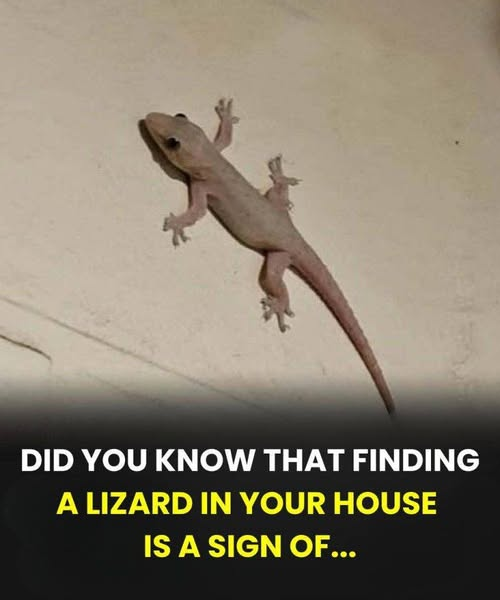
Finding a small lizard on your wall or ceiling can be an unexpected surprise. In some cultures, people interpret this encounter as a symbol of good fortune, protection, renewal, or change. In others, lizards are simply familiar creatures that share their surroundings with humans.
So, what does it mean when a lizard enters your home? The answer depends largely on local traditions, cultural beliefs, and personal interpretation.
Let’s explore some of the symbolism associated with lizards around the world—and what their presence may mean in practical terms.
1. A Symbol of Good Luck and Prosperity
In some folk traditions, seeing a lizard inside the home is considered a favorable sign. People may associate it with prosperity, opportunity, or positive changes ahead.
These interpretations vary widely between communities, and there is no universal belief that a lizard brings good luck. Still, the symbolism can be meaningful to people who grew up hearing these stories from parents and grandparents.
For some, the encounter becomes a gentle reminder to remain hopeful and open to new opportunities.
2. Renewal, Adaptability, and New Beginnings
Lizards are often associated with adaptability because many species can survive in changing environments. Some can also shed their skin as they grow, while certain species can regenerate part of a lost tail.
These natural characteristics have inspired symbolic interpretations involving renewal, resilience, and fresh beginnings.
If you enjoy interpreting animal encounters symbolically, a lizard might serve as a reminder to adapt to change, learn from experience, and move forward when circumstances shift.
This is a personal interpretation rather than a prediction about the future.
3. Protection and Awareness
Some people interpret a lizard appearing in their home as a symbol of protection or heightened awareness. Its quick movements and ability to detect changes in its surroundings may inspire associations with alertness and caution.
However, there is no scientific evidence that a lizard entering a house predicts danger or provides supernatural protection.
From a practical perspective, many house-dwelling lizards eat insects and may help reduce the number of mosquitoes, flies, and other small invertebrates around a building.
4. What Do Lizards Symbolize in Different Cultures?
Beliefs about lizards are not identical around the world. Their symbolism depends on the species, region, religion, and local folklore.
In South Asian Traditions
In parts of South Asia, particularly within certain Hindu folk traditions, lizards feature in traditional beliefs about signs and omens. Some regional systems assign meanings to sightings or movements, although interpretations differ considerably.
These beliefs are cultural traditions rather than scientifically verified ways of predicting events.
In African Traditions
African cultures are diverse, with many distinct languages, spiritual systems, and oral traditions. In some communities, reptiles and other animals appear in stories that explore wisdom, survival, caution, or the relationship between people and nature.
There is no single African interpretation of a lizard entering a house. The meaning, if any, depends on the specific community and its traditions.
In Indigenous Australian Traditions
Lizards appear in the stories, art, and cultural knowledge of various Aboriginal Australian peoples. Their meanings can be connected to particular landscapes, ancestral narratives, and relationships with the natural world.
These traditions are specific to individual peoples and places, so it would be inaccurate to assign one spiritual meaning to all Aboriginal Australian cultures.
In Western Symbolism
In some modern spiritual interpretations, lizards represent adaptability, awareness, survival, or transformation. These ideas are often inspired by their physical characteristics and behavior.
Such interpretations are personal or contemporary symbolic readings, not universal historical beliefs.
5. Does a Lizard Entering Your Home Mean Something Bad?
Not necessarily. There is no reliable evidence that finding a lizard indoors predicts misfortune, illness, financial problems, or other future events.
Lizards generally enter homes for ordinary reasons, such as:
- Searching for insects to eat.
- Finding shelter from heat, rain, or cold.
- Exploring small openings around doors, windows, roofs, or walls.
- Seeking a protected place to rest.
A lizard on your wall is usually a natural occurrence rather than a warning about something that will happen.
6. Why Do Lizards Often Appear on Walls and Ceilings?
Many common house geckos have specialized toe pads that help them grip smooth surfaces. This allows them to climb walls and ceilings while hunting insects attracted to indoor lights.
They are often more active at night, when insects gather around lamps and windows.
If you frequently see lizards indoors, check for gaps around windows, doors, vents, and other openings. Reducing insects near entrances and repairing damaged screens can also help limit their visits.
7. What Should You Do If You Find a Lizard Indoors?
Most small house geckos are harmless to people and prefer to avoid contact. If you do not want one inside, you can take a few simple steps:
- Stay calm and avoid trying to grab it by the tail.
- Open an exterior door or window, if safe, to provide an exit.
- If necessary, gently guide it toward the opening using a container or soft piece of cardboard.
- Avoid handling unfamiliar reptiles directly, and wash your hands after contact with a reptile or anything it may have contaminated.
- Seal gaps around windows and doors if lizards regularly enter.
If you cannot identify the animal or suspect it may be a dangerous species, avoid handling it and contact a local wildlife professional.
Frequently Asked Questions
Is a lizard entering the house a sign of good luck?
Some people consider it a sign of good fortune, but beliefs differ by region and tradition. There is no scientific evidence that a lizard predicts luck or future events.
Does a lizard in the house mean someone is sending negative energy?
There is no reliable evidence supporting this claim. A lizard’s presence is usually explained by shelter, temperature, and the availability of insects.
Is it safe to have a house lizard indoors?
Many common house geckos are harmless and can help control insects. Nevertheless, avoid direct contact with unfamiliar reptiles, and keep them away from food preparation areas.
Why do lizards keep coming back?
They may be finding food, shelter, or easy access through small openings. Reducing insects and sealing entry points can help prevent repeated visits.
Should I kill a lizard if I find one in my home?
Usually, there is no need. If the animal is a harmless house gecko, gently guiding it outside is often sufficient. Avoid touching it directly, particularly if you cannot identify the species.
Final Thoughts
A lizard entering your home can carry different symbolic meanings depending on the culture and personal beliefs of the people who encounter it. Some may associate it with good fortune, renewal, or adaptability, while others attach no spiritual significance to the event.
Ultimately, these interpretations belong to folklore and personal belief rather than scientific prediction. In everyday life, a lizard is often simply looking for insects, shelter, or a comfortable place to hide.
The next time you spot one on your wall, you can appreciate the cultural stories surrounding it while remembering the simple natural explanation behind its visit.