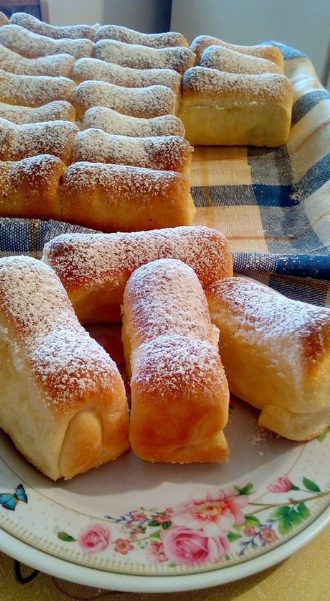
🇭🇺 Hungarian Jam Filled Yeast Pastry (Lekváros Bukta)
🥄 How to Make It:
Step 1: Prepare the Yeast
In a small bowl, combine the warm milk, 1 teaspoon sugar, and the yeast.
Let it sit for about 5–10 minutes until foamy.
(If it doesn’t foam, discard and start over — the milk may have been too hot or cold.)
Step 2: Make the Dough
In a large bowl, combine the flour, sugar, salt, and lemon zest.
Add the egg yolks, vanilla, melted butter, and the activated yeast mixture.
Mix together with a wooden spoon or dough hook until a dough forms.
Knead on a lightly floured surface for 8–10 minutes until soft, smooth, and elastic.
(The dough should be slightly sticky, but manageable.)
Step 3: First Rise
Form the dough into a ball and place it in a greased bowl.
Cover with plastic wrap or a clean kitchen towel.
Let it rise in a warm place for about 1 to 1½ hours, until doubled in size.
During this time, the kitchen will already start feeling cozy!
Step 4: Shape the Bukta
After the dough has risen, punch it down gently.
Turn it out onto a floured surface and roll it into a large rectangle, about ¼ inch (0.5 cm) thick.
Cut the dough into rectangles about 3×4 inches (7×10 cm).
Place a generous teaspoon of jam in the center of each rectangle.
Fold the shorter sides slightly over the jam, then roll up like a small log, pinching to seal.
(Important: Seal well so the jam doesn’t escape during baking.)
Step 5: Arrange and Second Rise
Butter a 9×13-inch (23×33 cm) baking dish or pan.
Place the jam-filled rolls seam side down, close together but with a little room to expand.
Brush the tops lightly with melted butter.
Cover loosely and let rise again for 30–40 minutes until puffy.
Step 6: Bake
Preheat your oven to 350°F (180°C).
Once the bukta have risen, brush them once more with melted butter.
Bake for 25–30 minutes, or until golden brown.
Remove from oven and let cool slightly.
Step 7: Dust and Serve
Once slightly cooled, dust generously with powdered sugar.
Pull apart gently, revealing the beautiful, jam-filled centers!
✨ How to Serve Bukta
Warm, with a cup of coffee or tea.
Split open and spread with extra butter (Hungarian grandmas loved this!).
With a little side of sour cream for a traditional touch.
As a sweet breakfast, snack, or light dessert.
🕊️ A Little History
Bukta became popular in Hungary in the 19th century, originally as a festive pastry baked for special days. Over time, it became an everyday favorite — loved for its soft dough, minimal ingredients, and the use of simple fruit preserves from home gardens.
The tradition is that every family has their preferred filling — apricot, plum (szilva), and strawberry are classic — and every grandmother has her own “perfect” dough technique!
Some even add a little rum to the jam or a hint of cinnamon for a winter version. ❄️
🍴 Tips for Perfect Bukta:
Use very thick jam to prevent leakage.
Don’t overfill each pastry — a heaping teaspoon is perfect.
Bake the pastries close together so they rise upward and stay extra soft.
Would you also like me to share a cream cheese-filled or poppy seed version of Bukta, like they do in some old Hungarian villages? 🌟 It’s absolutely heavenly if you want to try a different twist! 🎀✨